 Miya Bholat
Jan 30, 2026
Minimum Acceptable Tire Tread Depth in California: A Fleet Compliance Guide
Key Takeaways: Maintaining Safe Tire Tread Depth in Your California Fleet
-
California’s legal minimum is 2/32", but that is a bare minimum.
Operating at the legal threshold leaves no safety margin and increases risk during wet or emergency conditions. -
Best-practice fleets replace tires well before they reach 2/32".
Using 4/32" or higher thresholds improves safety, braking performance, and operational reliability. -
Accurate measurement and documentation matter.
Tread depth gauges and digital inspection records provide defensible proof of compliance during audits and investigations. -
California enforcement is active for commercial fleets.
BIT inspections and CHP roadside checks routinely flag tire violations, leading to fines and downtime. -
Proactive tire management costs less than reactive failures.
Planned replacements reduce accidents, downtime, and long-term liability exposure.
What Is the Legal Minimum Tire Tread Depth in California?
California law sets a minimum tire tread depth of 2/32 of an inch for passenger vehicles and commercial vehicles operating on public roads. This requirement comes from California Vehicle Code Section 27465, which states that tires must not be worn to the point where the tread depth is less than 2/32" in any major groove.
To put that measurement in practical terms, 2/32" is extremely shallow. At this depth, tires have very limited ability to channel water, maintain traction, or dissipate heat. While a vehicle may still be technically legal at this point, it is operating with almost no safety margin—especially for fleet vehicles that log high mileage or carry heavy loads.
California enforcement focuses on whether tread depth can be measured in the primary grooves, not just on the tire shoulder. During roadside inspections or maintenance checks, officers and inspectors use tread depth gauges to verify compliance, and tires that fail this threshold can trigger citations or out-of-service orders for commercial fleets.
Why Tire Tread Depth Matters for Fleet Safety
Tire tread depth directly affects how a vehicle handles braking, cornering, and wet-road conditions. For fleets, worn tires increase risk not just to drivers but also to the public and the business itself, making tire condition a critical fleet safety concern.
As tread depth decreases, stopping distances increase significantly. Studies from safety organizations consistently show that tires worn near 2/32" can take dozens of additional feet to stop on wet pavement compared to tires with moderate tread. That extra distance often determines whether a near miss becomes a collision.
Worn tires also raise the risk of hydroplaning. Without sufficient tread channels to disperse water, tires lose contact with the road surface at much lower speeds. For fleets operating in California’s winter rain zones or coastal regions, this becomes a major exposure point.
From a liability perspective, tire condition is one of the first items reviewed after an accident. If investigators find that fleet vehicles were operating at or near the legal minimum, fleet operators may face increased legal exposure—even if the vehicle technically met the minimum standard.
How to Measure Tire Tread Depth
Accurate measurement is the foundation of tire compliance. Fleet teams should rely on consistent methods rather than visual estimates alone.
The Penny Test Method
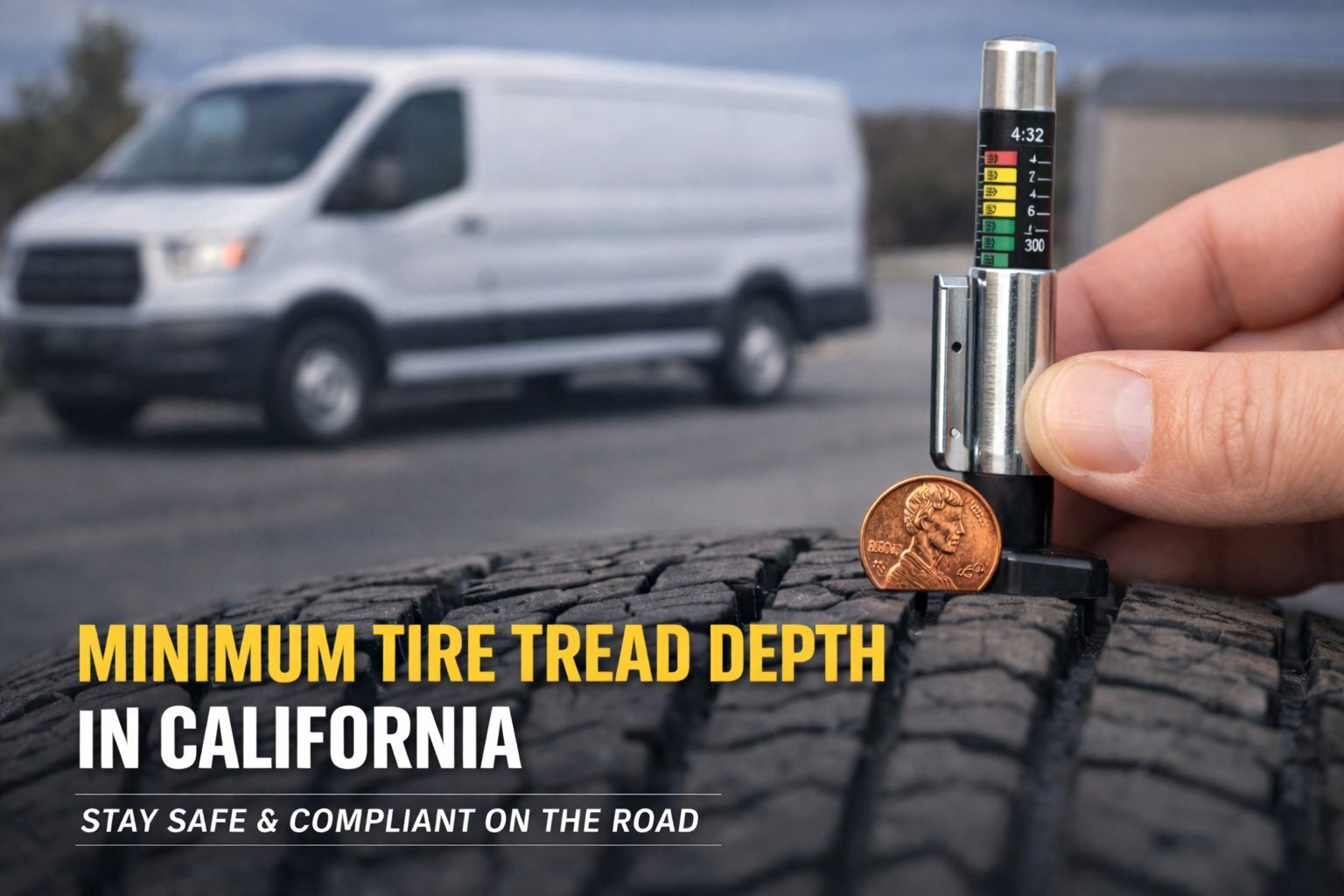
The penny test is a simple, quick way to assess tread depth in the field. Insert a penny into a tire’s tread groove with Lincoln’s head facing down. If the top of Lincoln’s head is visible, the tread depth is below 2/32", and the tire is no longer legal.
While this method works for basic checks, it lacks precision and consistency. It’s useful for drivers performing quick visual inspections but should not replace documented measurements in a fleet maintenance program.
Professional Tread Depth Gauges
Tread depth gauges provide exact measurements and are the preferred tool for fleet inspections. These handheld devices measure tread depth in 32nds of an inch and allow technicians to record precise values.
Using gauges ensures consistency across inspections and creates a paper trail for compliance audits. When combined with digital inspection records through tools like a Digital Vehicle Inspection App, fleets can track tread wear trends over time rather than reacting to last-minute failures.
Tire Wear Indicators
Most modern tires include built-in wear bars molded into the tread grooves. When the tread surface wears down to the same level as these bars, the tire is at approximately 2/32".
Wear indicators provide a visual warning, but they should be treated as a final alert—not a target. For fleets, waiting until wear bars are flush means the tire is already at the legal limit with no safety buffer remaining.
When to Replace Fleet Tires: Beyond the Legal Minimum
Although 2/32" is the legal minimum in California, most fleet safety professionals consider it far too low for real-world operations. At that depth, tires offer minimal wet traction and reduced heat resistance.
Industry best practices recommend higher replacement thresholds to maintain safety and uptime:
- 4/32" for steer tires, where braking and directional control matter most
- 4/32" to 5/32" for drive tires, depending on vehicle weight and torque
- 6/32" for vehicles operating frequently in wet or mountainous conditions
Front and rear tires often wear differently, and replacement strategies should reflect that reality. Steer tires typically wear faster and have a larger impact on vehicle control, making early replacement a safer option.
Vehicle type also matters. Heavy-duty trucks, vans with frequent stop-and-go routes, and vehicles carrying tools or equipment all place additional stress on tires. Fleets operating in construction, utilities, or public works often adopt higher tread thresholds to reduce downtime and roadside failures.
California-Specific Considerations for Fleet Tire Management
California presents unique operational and enforcement challenges for fleet tire compliance. Seasonal rain, varied terrain, and active inspection programs raise the stakes for worn tires.
Commercial vehicles in California are subject to BIT (Bureau of Inspection and Truck) inspections, which include tire condition as a core compliance item. Inspectors check tread depth, sidewall damage, and overall tire integrity, and failures can lead to citations or corrective action requirements.
The California Highway Patrol (CHP) also conducts roadside inspections, particularly for commercial trucks and vans. Tires found below legal limits can result in immediate violations, and in some cases, vehicles may be placed out of service until repairs are made.
Ignoring tire standards can lead to several consequences:
- Monetary fines that escalate with repeat violations
- Out-of-service orders that disrupt schedules
- Increased scrutiny during future inspections
The Cost of Ignoring Tire Tread Depth
Accident and Liability Costs
Tire-related accidents often carry high financial and legal consequences. Beyond vehicle repairs, fleets may face medical claims, legal fees, increased insurance premiums, and reputational damage. Even a single preventable accident can outweigh the cost of proactive tire replacement across an entire fleet.
Vehicle Downtime and Operational Impact
Unexpected tire failures take vehicles off the road without warning, resulting in vehicle downtime that disrupts schedules and operations. This leads to missed jobs, delayed deliveries, and costly emergency repairs. For service-based fleets, downtime directly impacts customer satisfaction and revenue.
Tracking tire condition alongside other maintenance items using a Vehicle Service History System helps fleets plan replacements before failures occur.
Fines and Penalties
California tire violations can result in fines that vary by jurisdiction and vehicle classification, but costs typically increase when violations are found during commercial inspections. Repeat offenses may also affect safety scores and inspection ratings, creating long-term compliance issues.
Best Practices for Fleet Tire Tread Monitoring
Effective tire management requires consistency, documentation, and accountability across the fleet. The following practices help reduce risk while improving operational control.
To maintain compliance and safety, fleet operators should implement a structured approach that includes:
- Scheduled inspections tied to mileage or time intervals rather than visual checks alone
- Documented tread depth measurements recorded during inspections and maintenance events
- Driver training so operators can identify visible wear issues during daily walkarounds
- Defined replacement thresholds that exceed the legal minimum for safety
- Regular tire rotation schedules to promote even wear and extend tire life
Fleet maintenance platforms like AUTOsist support these practices by centralizing inspection records, maintenance schedules, and compliance documentation in one system, reducing reliance on paper logs and memory-based decisions.
For California fleets, tire tread depth should never be treated as a last-minute compliance issue. A structured inspection process, clear replacement standards, and consistent documentation create safer vehicles, stronger compliance, and more predictable fleet operations.