 Miya Bholat
May 04, 2026
How to Build a Fleet Management System Step by Step?


When most fleet managers inherit a "system," it usually looks like a mix of spreadsheets, sticky notes, and institutional knowledge sitting in one person's head.
The cracks show quickly. That person leaves. A vehicle fails inspection. A breakdown happens and no one can find service history. Suddenly, operations slow down or stop entirely.
This is exactly why many teams move away from manual processes and adopt a structured fleet management software platform that brings everything into one system.
If you are still relying on spreadsheets, it helps to understand the gap by looking at a clear comparison of spreadsheets versus fleet management software.
Building a real system is not about buying software. It is about creating repeatable processes that scale. Software simply supports those processes.
If you are starting fresh or replacing something broken, this guide walks you through how to build a fleet management system step by step.
Key Takeaways
- A fleet management system is built on process, not just software
Without clear workflows, even the best tools fail to deliver results. - Accurate asset data is the foundation of everything
Incomplete records lead to missed maintenance, compliance issues, and poor decisions. - Maintenance workflows drive uptime and cost control
Preventive schedules and inspections reduce breakdowns and keep operations predictable. - Compliance tracking prevents avoidable risks and penalties
Expired documents and missing records can stop operations instantly. - Cost tracking reveals which assets are hurting your business
Fuel, repairs, and downtime data help you decide whether to repair or replace. - Adoption matters more than implementation
If drivers and teams do not use the system daily, it will fail regardless of software quality.
What a Fleet Management System Actually Needs to Do
Before jumping into steps, it is important to understand what a fleet management system actually is.
At its core, a functional system should:
- Track every vehicle and piece of equipment
- Schedule and record maintenance consistently
- Store and manage compliance documents
- Monitor costs across assets
- Provide visibility into performance and issues
If your system cannot answer questions like:
- Which vehicle is due for service next
- Which assets are costing too much to maintain
- Which documents are about to expire
Then it is not working.
This is where the real benefits of fleet management system adoption show up. You gain visibility, control, and predictability across your entire operation.
Step 1 Build Your Asset Inventory Before Anything Else
Everything starts here. If your data is wrong, everything that follows will be wrong.
What to Record for Every Vehicle or Piece of Equipment
Create a standardized record for each asset so your system stays consistent.
At a minimum, capture:
- Vehicle identification number or internal ID
- Make model and year
- Assigned driver or operator
- Current mileage or engine hours
- Registration and insurance expiration dates
- Maintenance and service history
Using a structured system like vehicle service history tracking ensures records are centralized instead of scattered across files.
How to Handle Mixed Fleets Owned Leased Subcontracted
Most fleets operate a mix of owned vehicles, leased assets, and subcontracted equipment.
The key is treating them all consistently inside your system.
Even if you do not own the asset, you still need:
- Usage tracking
- Maintenance visibility
- Compliance documentation
Without this, gaps appear quickly, especially as operations grow. This becomes even more critical as fleets expand, as explained in managing fleet growth beyond twenty vehicles.
Step 2 Define Your Maintenance Workflows
Once assets are clearly defined, the next step is building how you maintain them.
This is the core of your system.
Preventive Maintenance Schedules by Asset Type
Different assets require different schedules.
A pickup truck may follow mileage intervals, while heavy equipment relies on engine hours.
Using structured tools like fleet preventive maintenance schedules ensures consistency across asset types.
How to Set Triggers Mileage Hours or Calendar Based
Choose triggers based on how the asset is actually used:
- Mileage based for vehicles
- Engine hours for heavy equipment
- Calendar based for low usage assets
This keeps maintenance aligned with real usage instead of guesswork.
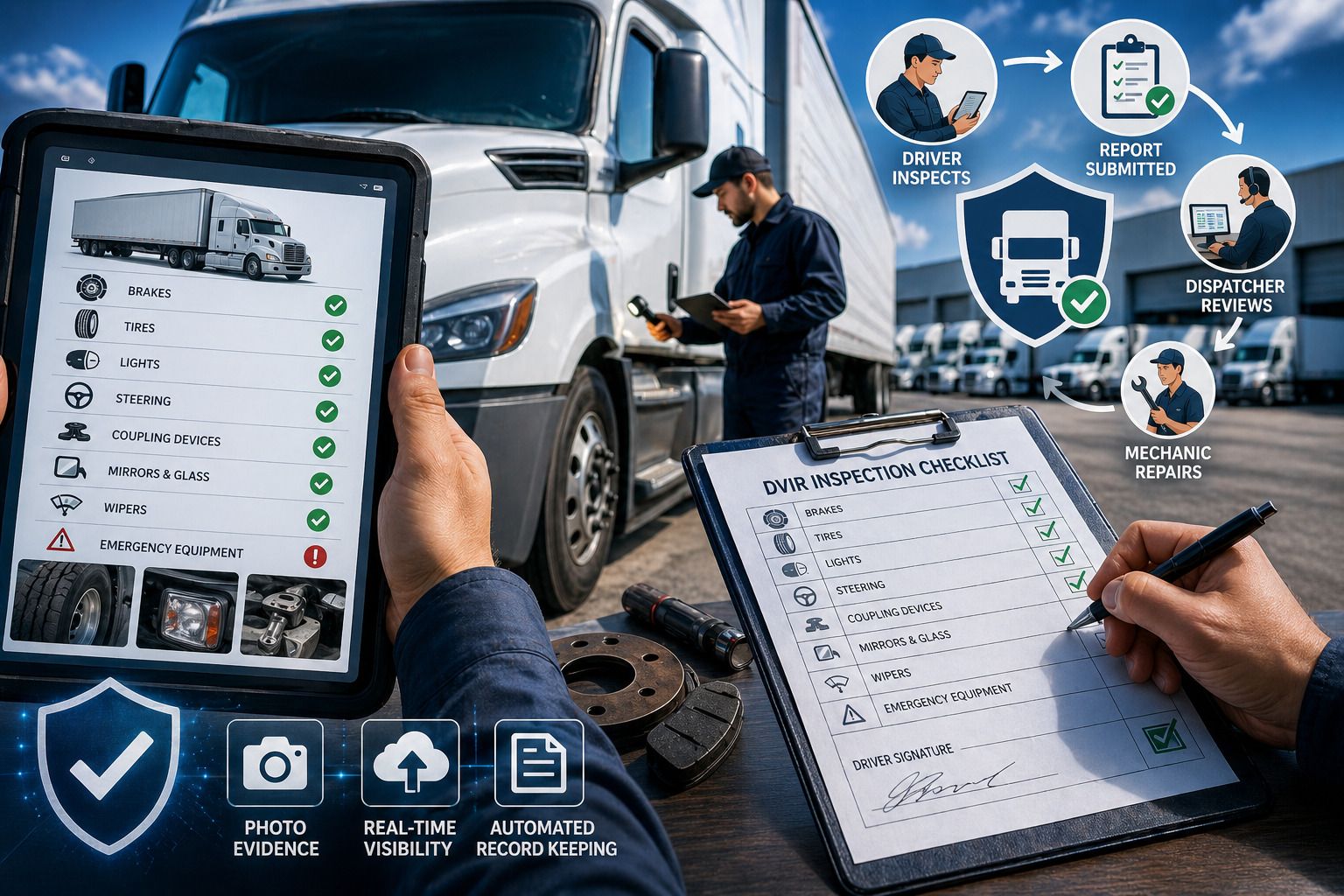
Building an Inspection Routine That Actually Gets Done
Inspection routines only work if teams actually complete them.
To make this practical:
- Keep inspection forms short
- Make them mobile friendly
- Require submissions before or after shifts
A tool like a digital vehicle inspection app helps ensure inspections happen consistently.
Skipping inspections leads to larger failures over time, which is a common issue highlighted in common fleet management mistakes.
Step 3 Set Up Your Document and Compliance Tracking
Compliance failures are one of the easiest ways to disrupt operations.
Instead of reacting, build a system that tracks everything proactively.
Every fleet should track:
- Vehicle registrations
- Insurance certificates
- Driver licenses and CDL expirations
- Inspection and compliance records
- Permits and certifications
A centralized vehicle document management system makes documents accessible instantly during inspections or audits.
Set alerts for expiration dates so nothing lapses.
This becomes even more important when managing multiple locations, as explained in how to run fleet operations across multiple locations.
Step 4 Create a Cost Tracking Structure You Will Actually Use
Most fleets track costs, but not in a way that supports decision making.
Fuel Repairs and Total Cost of Ownership Per Asset
To understand real costs, track everything per asset.
This includes:
- Fuel expenses
- Maintenance and repair costs
- Labor and service time
- Downtime and lost productivity
A system that includes fleet fuel management software helps connect fuel usage with overall performance, especially for teams building a fleet management system with fuel management capabilities.
Identifying Which Assets Are Costing You More Than They Are Worth
Once you have data, you can act on it.
Example:
- Vehicle A costs 4000 dollars annually in repairs
- Vehicle B costs 1500 dollars annually
If both generate similar output, Vehicle A may not be worth keeping.
When you factor in downtime and fuel usage, the gap becomes even clearer.
This is how you move toward data driven decisions and can understand how fleet management software improves decision making.
Step 5 Choose Software That Matches How Your Fleet Actually Operates
Now that your system is defined, you need software that supports it.
What to Look for Beyond the Feature List
The best system is not the one with the most features. It is the one your team will actually use.
Look for:
- Mobile access for drivers and operators
- Simple and fast data entry
- Flexible maintenance scheduling
- Document storage and alerts
- Clear and useful reporting
If you are evaluating options, this fleet management software buyers guide helps structure your decision.
This is especially useful if you are asking questions like how to choose the best fleet management system for a mid sized logistics company or comparing which best rated fleet management systems improve productivity.
Red Flags When Evaluating Fleet Management Software
Watch out for systems that:
- Require complex IT setup
- Do not support equipment without VINs
- Slow down daily workflows
- Offer limited reporting or unclear dashboards
- Lock your data into proprietary formats
Many fleets fail here by choosing tools that look good in demos but fail in daily use. This is explained in detail in why fleet management software fails and how to fix it.
If reporting matters, especially when evaluating which truck fleet management systems offer the most useful dashboards for managers, focus on clarity and usability, not just visuals.
Step 6 Roll Out the System Without Losing Your Team
A system only works if people use it consistently.
Getting Driver and Operator Buy In
Adoption starts with simplicity.
To improve usage:
- Keep processes quick and intuitive
- Provide hands on training
- Set clear expectations
When systems are easy to use, adoption follows naturally. This is why many teams move toward integrated fleet management software that connects operations.
Migrating from Spreadsheets Without Losing Historical Data
Migration does not have to be overwhelming.
Approach it in phases:
- Start with active assets
- Import essential historical data
- Clean and standardize records
If you are still managing manually, this guide on managing fleet operations without spreadsheets shows why structured systems perform better over time.
Frequently Asked Questions
-
What is a fleet management system?
A fleet management system is a structured way to track assets, manage maintenance, monitor costs, and ensure compliance. It combines processes and software to give full visibility into operations. -
How long does it take to set up a fleet management system?
Most fleets can build a basic system in a few weeks. The timeline depends on fleet size, data quality, and how quickly teams adopt new workflows. -
What is the best fleet management system for contractors or small fleets?
The best system is one that is easy to use, supports mobile workflows, and handles mixed assets. For fleets under twenty five vehicles, simplicity and usability matter more than advanced features. -
How do I track fleet maintenance costs effectively?
Track costs per asset including fuel, repairs, labor, and downtime. This helps calculate total cost of ownership and identify underperforming vehicles. -
How accurate are ETA predictions in fleet management systems?
ETA accuracy depends on GPS data, routing logic, and traffic integration. Modern systems using GPS tracking and telematics systems provide highly reliable estimates when configured correctly.