How to Calculate Fleet Downtime Cost
Fleet downtime cost represents the financial impact that occurs when a vehicle is unavailable for service due to maintenance, breakdowns, or operational delays. Accurately calculating this cost helps fleet managers understand operational inefficiencies, prioritize preventive maintenance, and make informed decisions that reduce disruptions across the fleet.

Example Fleet Downtime Cost Calculation
| Cost Factor | Example Value | Downtime Hours | Total Cost |
|---|---|---|---|
| Lost Revenue per Hour | $120 | 10 | $1200 |
| Driver Labor Cost | $30 | 10 | $300 |
| Emergency Repair Cost | $850 | 1 event | $850 |
| Rental Vehicle Cost | $95/day | 2 days | $190 |
Direct Downtime Costs vs Indirect Downtime Costs
Understanding downtime cost requires evaluating both direct expenses and secondary operational impacts. These categories help fleet managers build a more accurate financial picture.

Direct Downtime Costs
- Emergency repair expenses
- Rental or replacement vehicle costs
- Towing and roadside recovery services
- Replacement parts and technician labor

Indirect Downtime Costs
- Lost delivery or service revenue
- Customer service disruptions or delays
- Idle driver or technician labor time
- Reduced overall fleet utilization
What Fleet Downtime Means in Operational Terms
Fleet downtime occurs whenever a vehicle cannot perform its assigned tasks due to maintenance, inspection failures, mechanical breakdowns, or administrative delays. While some downtime is planned through scheduled maintenance, unplanned downtime often leads to operational disruption and higher costs.
Common situations that contribute to downtime include the following operational events.
- Unexpected mechanical failures requiring emergency repair
- Delays caused by inspection failures or compliance issues
- Parts shortages extending repair timelines
- Scheduling conflicts that prevent timely maintenance
Effective downtime management requires maintaining reliable service records and maintenance histories. Tools such as a fleet maintenance guide can help fleets understand how maintenance planning directly influences vehicle availability.
Outcome of accurate downtime identification:
- Improved fleet availability
- More predictable maintenance scheduling
- Reduced disruption to daily operations

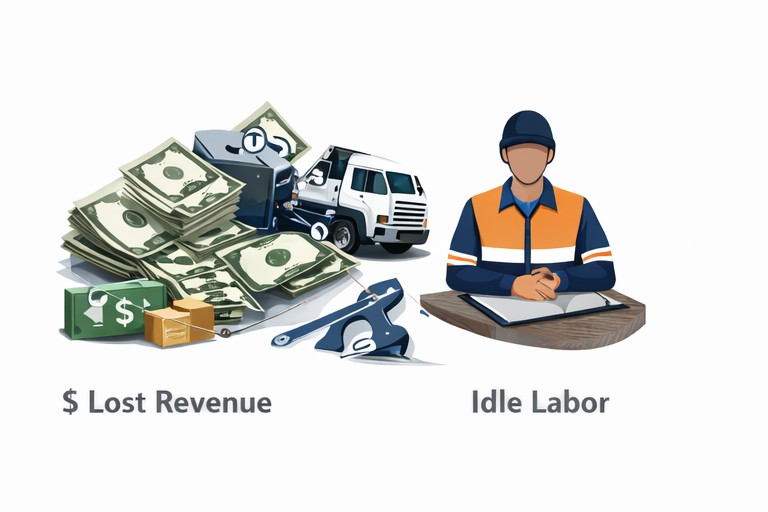
Core Cost Components That Contribute to Fleet Downtime
Fleet downtime cost is typically made up of several direct and indirect financial components. Identifying these cost drivers helps fleet managers estimate the true impact of vehicle unavailability.
Key cost components typically include the following factors.
- Lost operational revenue when a vehicle cannot complete assigned work
- Driver or technician labor costs during idle time
- Emergency repair costs caused by unplanned breakdowns
- Rental or replacement vehicle expenses used to maintain operations
- Towing or recovery costs when vehicles require transport to repair facilities
Tracking these cost categories consistently allows fleet teams to evaluate patterns in downtime events. Over time, this data helps identify whether mechanical issues, maintenance delays, or operational factors are responsible for repeated downtime.
Additional operational outcomes of understanding downtime cost components:
- Clearer budgeting for maintenance operations
- Better planning for parts inventory and service scheduling
- Improved accountability across maintenance workflows
Step-by-Step Method to Calculate Fleet Downtime Cost
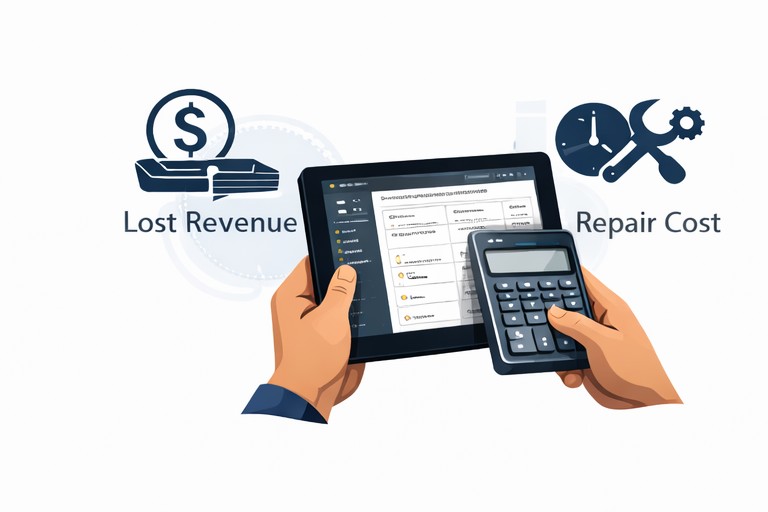
Calculating downtime cost requires combining several operational metrics into a simple cost model. This approach allows fleet managers to estimate the financial impact of downtime on a per-vehicle or fleet-wide basis.
The following operational steps provide a structured calculation method.
- Determine average revenue or utilization value per vehicle hour based on deliveries, services, or operational output
- Calculate driver or technician labor cost per hour associated with the vehicle
- Estimate repair or recovery expenses related to the downtime event
- Multiply the hourly cost factors by total downtime hours recorded for the vehicle
- Add secondary operational expenses such as rentals or subcontracted services
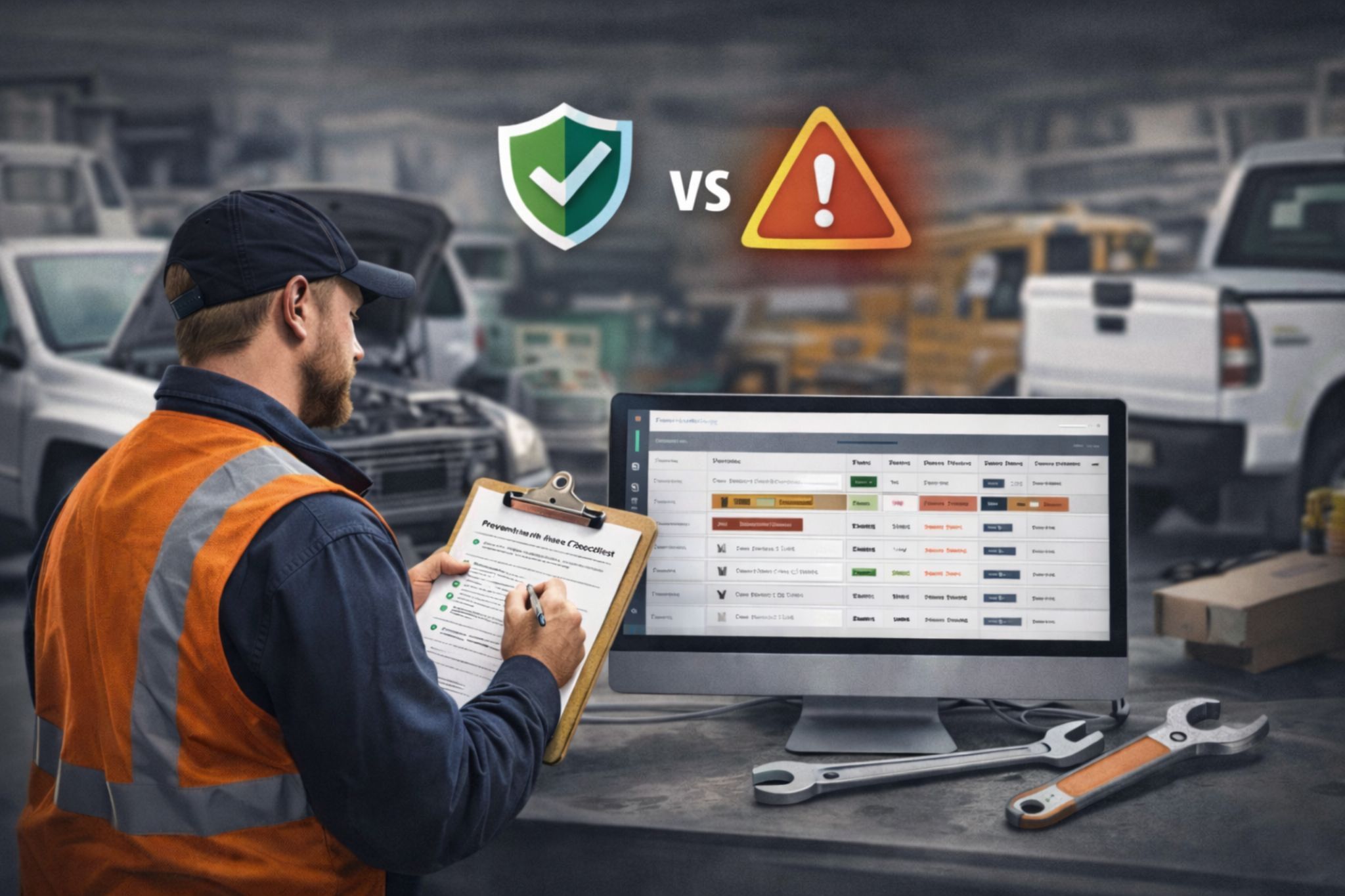
Fleet managers often track downtime events through maintenance logs and service records. A structured vehicle inspection guide can help ensure issues are detected early before they escalate into extended downtime.
Operational benefits of using a consistent downtime calculation method:
- Standardized cost analysis across the fleet
- Improved ability to compare vehicles or asset groups
- Data-driven maintenance planning

Using Fleet Data to Monitor and Reduce Downtime Cost
Fleet downtime cost becomes easier to control when organizations maintain consistent maintenance records, inspection histories, and repair documentation. Reliable operational data helps fleets identify recurring failure patterns and prevent repeated downtime events.
To improve visibility into downtime drivers, fleet teams typically monitor the following operational data points.
- Vehicle service history and repair records
- Maintenance schedules and overdue service events
- Inspection results and compliance documentation
- Downtime duration for each repair event
- Cost of parts, labor, and external services
Centralized fleet systems allow maintenance teams to track these data points more consistently. Platforms such as fleet maintenance software can help consolidate service records, maintenance schedules, and operational reporting into a single environment.
Operational improvements supported by data-driven downtime monitoring include:
- Early detection of mechanical trends
- Reduced frequency of emergency repairs
- Improved vehicle lifecycle management
Final Takeaways
Fleet downtime cost reflects the total operational impact of vehicles being unavailable for service. Understanding both direct repair expenses and indirect operational losses allows fleet managers to make more informed maintenance and asset management decisions.
Key operational points to remember include the following.
- Downtime cost includes both direct repair expenses and indirect operational losses.
- Lost revenue and idle labor often represent the largest downtime cost factors.
- Structured calculation methods help standardize downtime cost analysis.
- Maintenance records and inspections play a key role in preventing unplanned downtime.
- Data-driven fleet management helps reduce downtime frequency over time.
AUTOsist Fleet Management Resources
Fleet Maintenance Guide

Vehicle Inspection Guide

Vehicle Inspection Checklist Template
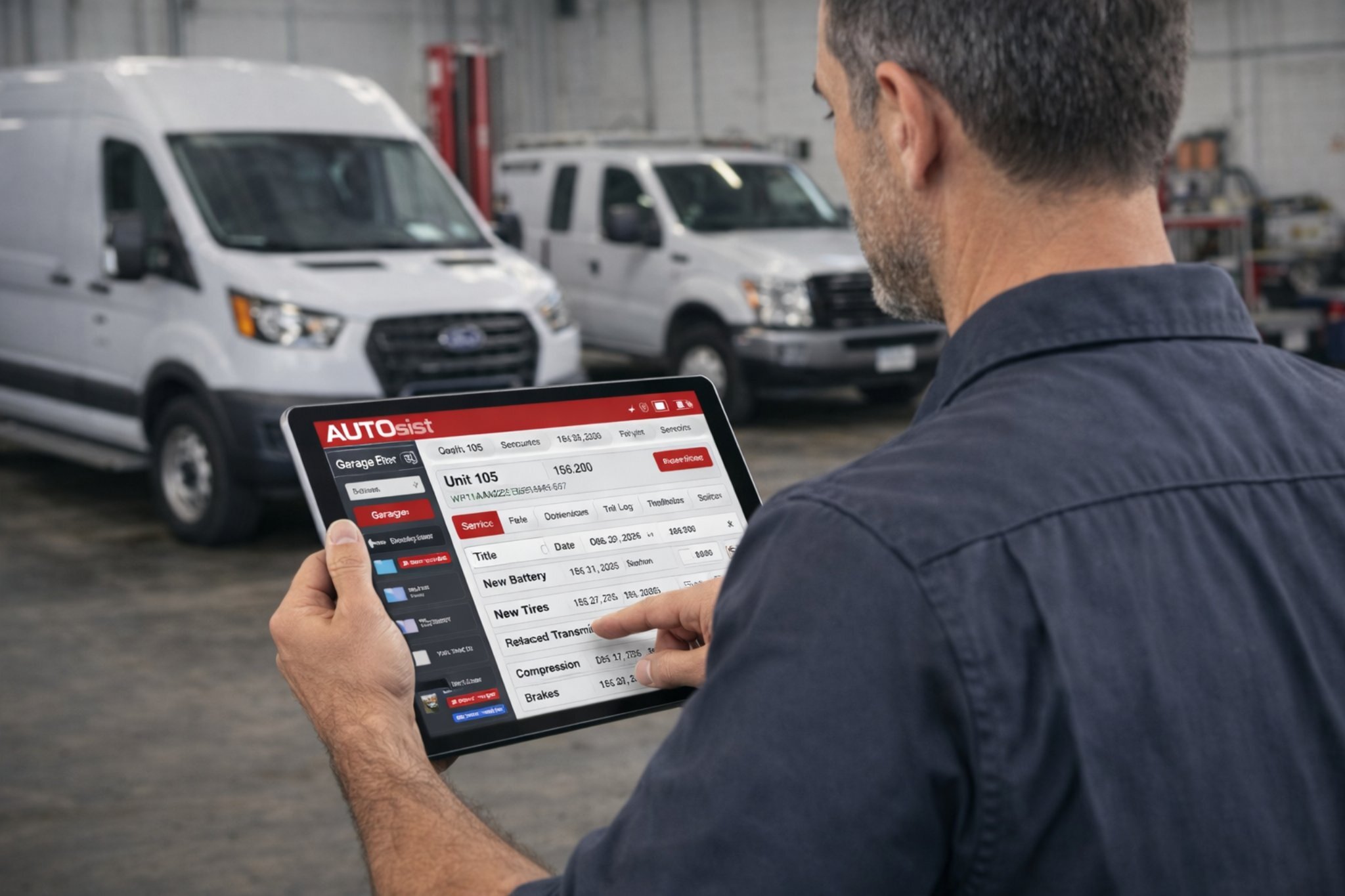
Fleet Maintenance Software