Fleet Service Scheduling
Fleet service scheduling refers to the structured planning of vehicle maintenance activities based on defined service intervals and operational data. A well-managed scheduling process helps fleet operators reduce unexpected downtime, maintain vehicle reliability, and ensure maintenance work is completed before mechanical issues disrupt operations.

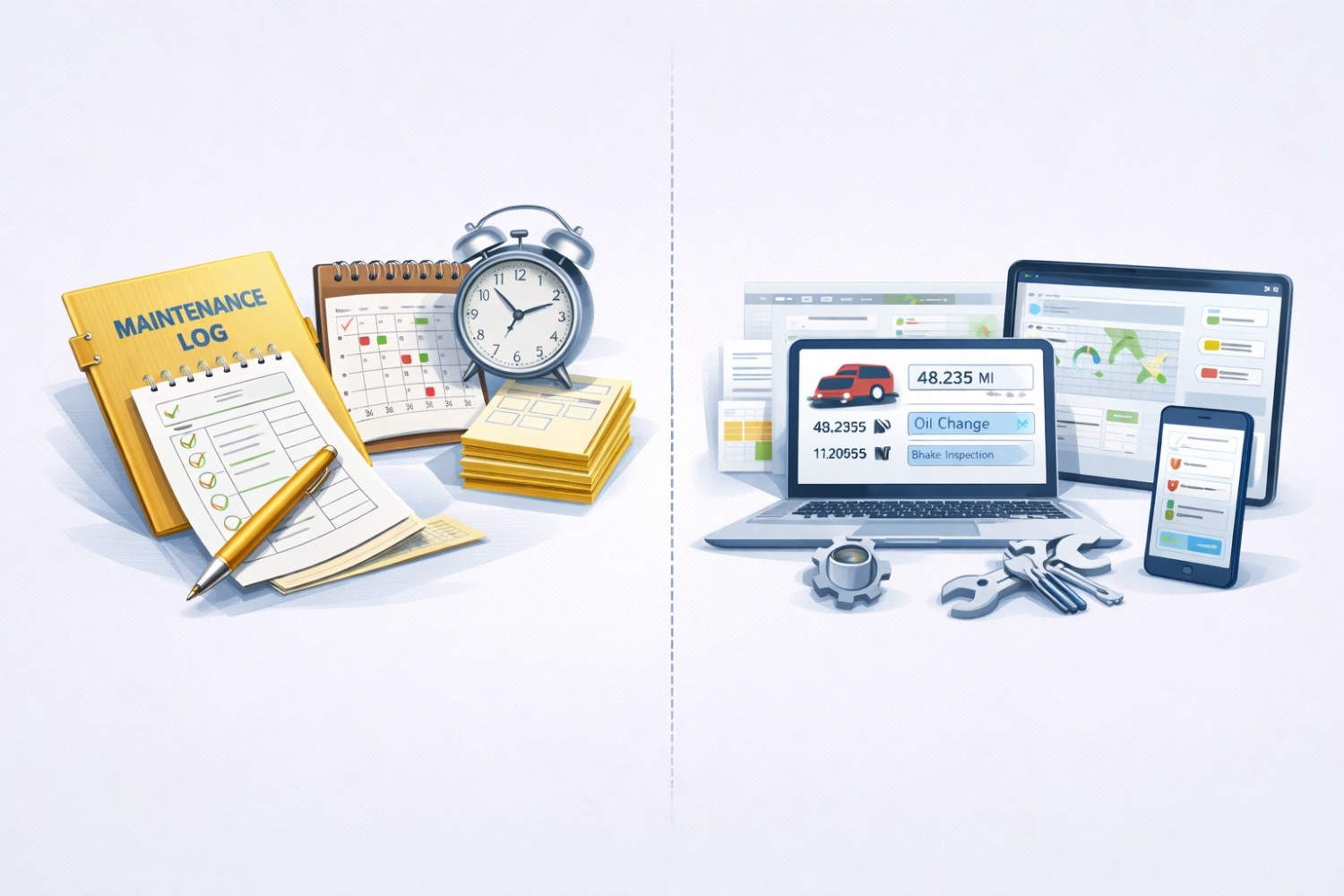
Manual vs Software-Based Fleet Service Scheduling
| Scheduling Method | Tracking Method | Operational Visibility | Risk Level |
|---|---|---|---|
| Paper Logs | Manual records | Low | High |
| Spreadsheets | Manual updates | Limited | Medium |
| Calendar Reminders | Date alerts | Partial | Medium |
| Maintenance Software | Automated alerts | High | Low |
| Integrated Telematics | Data-driven | Very High | Very Low |
Preventive Maintenance Scheduling vs Reactive Maintenance
Preventive maintenance scheduling and reactive maintenance represent two different approaches to fleet maintenance planning. Understanding these approaches helps fleet managers determine how maintenance strategy affects operational reliability and cost control.

Preventive Maintenance Scheduling
Operational approach
- Maintenance activities are scheduled before component failure occurs
- Service intervals are defined using mileage, time, or engine hours
- Maintenance planning becomes structured and predictable
Operational outcomes
- Lower probability of unexpected vehicle breakdowns
- Improved equipment reliability and lifespan
- Greater stability in fleet availability

Reactive Maintenance
Operational approach
- Maintenance occurs only after a vehicle or component fails
- Maintenance activities are unplanned and irregular
- Repairs are often urgent or emergency-based
Operational outcomes
- Increased risk of vehicle downtime
- Higher repair costs due to emergency maintenance
- Disruptions to fleet operations and scheduling
What Fleet Service Scheduling Means in Fleet Operations
Fleet service scheduling is the operational process of planning and coordinating maintenance activities across fleet vehicles to ensure that routine service tasks occur at appropriate intervals. These schedules help maintain asset reliability while minimizing operational disruptions.
Typical operational activities involved in fleet service scheduling include:
- Defining service intervals for vehicle components
- Monitoring mileage, engine hours, or time-based service triggers
- Coordinating service activities with technicians or external service providers
- Tracking maintenance history for every vehicle
- Planning service work around vehicle availability
Operational outcomes
- Higher fleet uptime and reliability
- Reduced risk of unexpected service disruptions
- More consistent vehicle maintenance planning
Many fleet organizations rely on guidance such as the fleet maintenance SOP guide to standardize how maintenance procedures and service schedules are managed across operations.

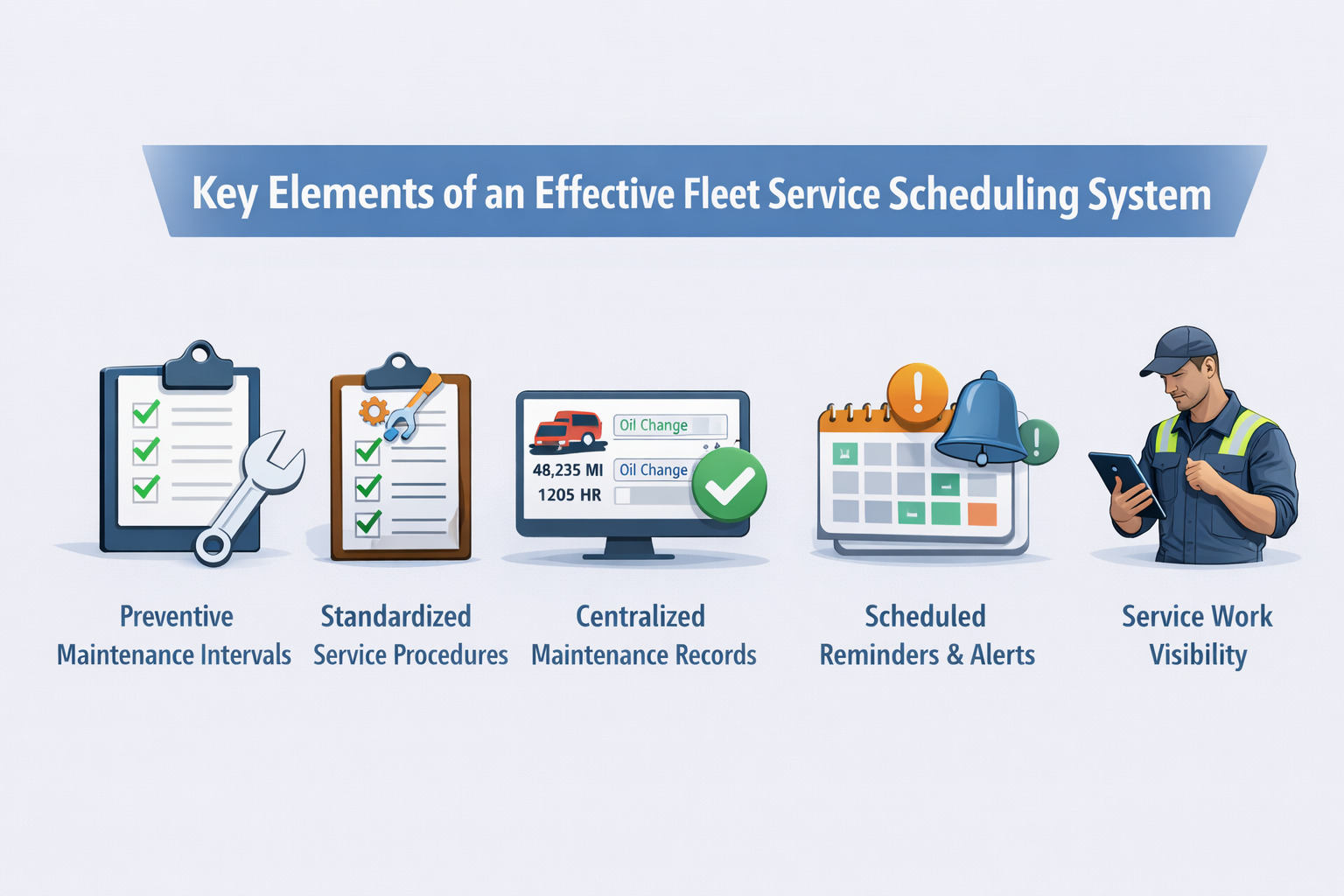
Key Elements of an Effective Fleet Service Scheduling System
An effective service scheduling system requires multiple operational elements working together to ensure maintenance tasks are consistently planned and executed across the fleet.
Important elements typically include:
- Defined preventive maintenance intervals for each vehicle type
- Standardized service procedures for recurring maintenance tasks
- Centralized maintenance records and service history
- Scheduled reminders or alerts for upcoming maintenance
- Operational visibility into upcoming and completed service work
Operational outcomes
- Improved maintenance consistency across vehicles
- Reduced dependency on manual maintenance tracking
- Better coordination between operations teams and maintenance personnel
Fleet managers often follow structured planning methods outlined in the preventative maintenance guide for fleet operations to design maintenance intervals that align with vehicle usage patterns.
Common Methods Used to Schedule Fleet Maintenance
Fleet maintenance schedules are usually built around operational indicators that reflect how vehicles are used in real-world conditions. These indicators allow maintenance intervals to remain practical and aligned with fleet usage patterns.
Common service scheduling methods include:
- Time-based scheduling using calendar intervals
- Mileage-based scheduling using odometer readings
- Engine-hour-based scheduling for equipment fleets
- Inspection-based scheduling triggered by driver reports
- Condition-based scheduling using telematics or diagnostics
Operational outcomes
- Maintenance intervals aligned with vehicle usage
- More predictable workshop workloads
- Better planning for parts and technician availability
Fleet operators frequently use structured resources such as a preventive maintenance schedule template to organize maintenance intervals and track service planning across vehicles.
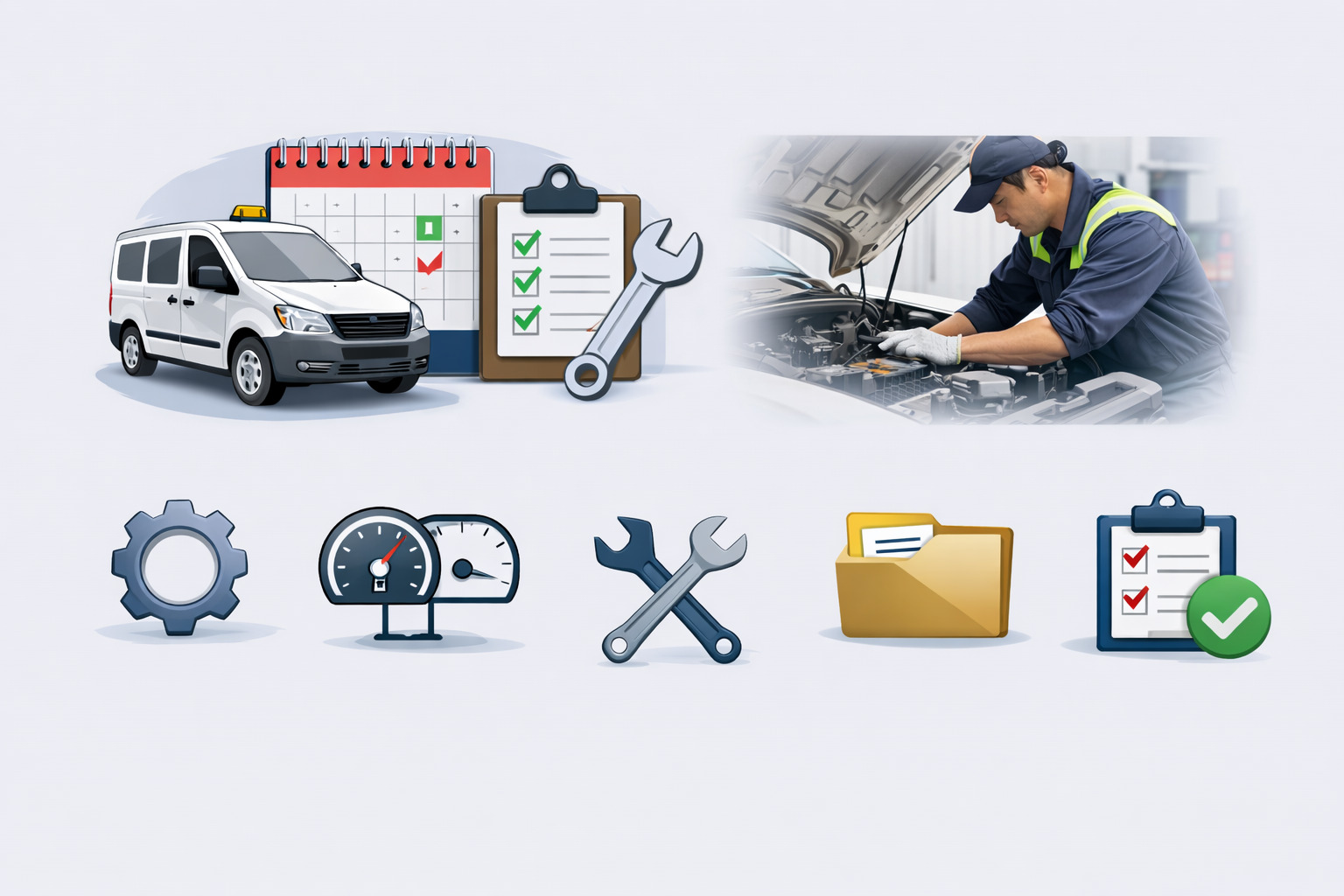

Implementing Fleet Service Scheduling Across a Fleet
Implementing fleet service scheduling requires coordination between operational planning, maintenance teams, and vehicle usage data. A consistent system ensures service tasks are not overlooked and maintenance remains manageable across the entire fleet.
Key implementation practices include:
- Establishing service intervals for each vehicle category
- Assigning responsibility for monitoring maintenance schedules
- Integrating inspection results into service planning
- Maintaining centralized maintenance records
- Adjusting schedules based on vehicle usage patterns
Operational outcomes
- Consistent service scheduling across all vehicles
- Improved accountability for maintenance oversight
- Lower risk of missed or delayed maintenance tasks
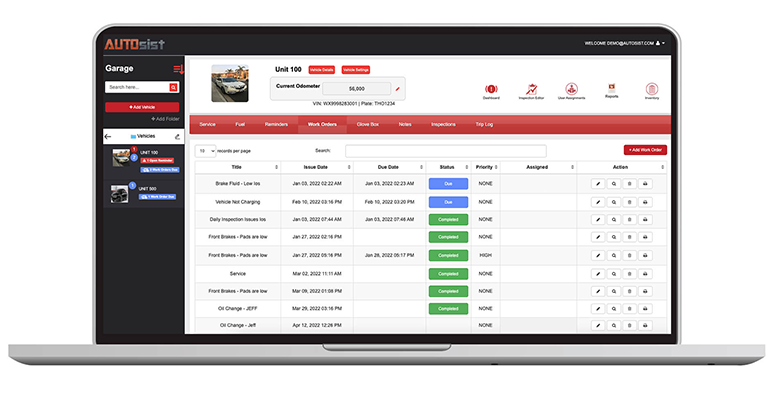
Many fleet operators use digital systems such as fleet maintenance work order software to schedule service tasks, manage work orders, and track completed maintenance activities.
Monitoring and Adjusting Service Schedules Using Fleet Data
Fleet service schedules should evolve as operational data becomes available. Monitoring maintenance outcomes and vehicle performance allows fleet managers to refine service intervals and improve scheduling accuracy.
Key data sources used for schedule adjustments include:
- Driver vehicle inspection reports
- Historical maintenance records
- Telematics and vehicle usage data
- Repair cost analysis across the fleet
- Component failure patterns
Operational outcomes
- Improved accuracy in maintenance intervals
- Early detection of potential mechanical issues
- More effective long-term maintenance planning
Regular review of maintenance data ensures fleet service schedules remain aligned with actual vehicle performance and operating conditions.
Final Takeaways
Fleet service scheduling plays a central role in maintaining vehicle reliability and operational continuity. By establishing structured maintenance intervals and monitoring fleet performance data, fleet managers can reduce downtime and maintain consistent fleet operations.
Key operational points include:
- Structured service schedules help prevent unexpected vehicle failures.
- Preventive maintenance reduces emergency repairs and downtime.
- Usage-based maintenance scheduling aligns service with real vehicle activity.
- Centralized service records improve maintenance visibility.
- Data-driven scheduling improves long-term fleet reliability.
AUTOsist Fleet Management Resources

Fleet Maintenance SOP Guide

Preventative Maintenance Guide for Fleet Operations
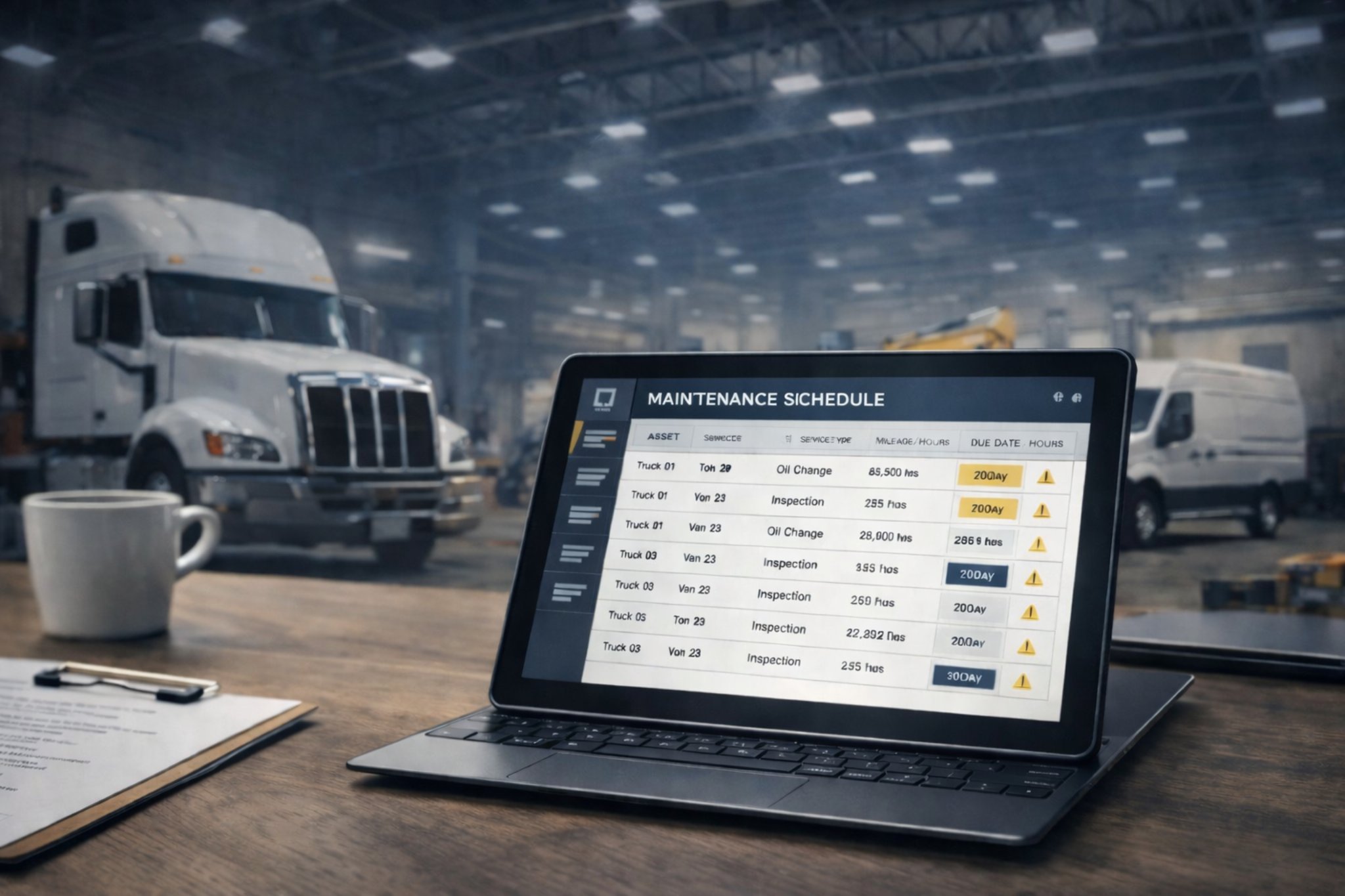
Preventive Maintenance Schedule Template
Fleet Maintenance Work Order Software