Fleet Performance Monitoring
Fleet performance monitoring refers to the continuous tracking and evaluation of operational, maintenance, safety, and utilization metrics across a vehicle fleet. For fleet managers and operations teams, consistent monitoring helps identify inefficiencies, reduce downtime, improve asset utilization, and support data-driven operational decisions.
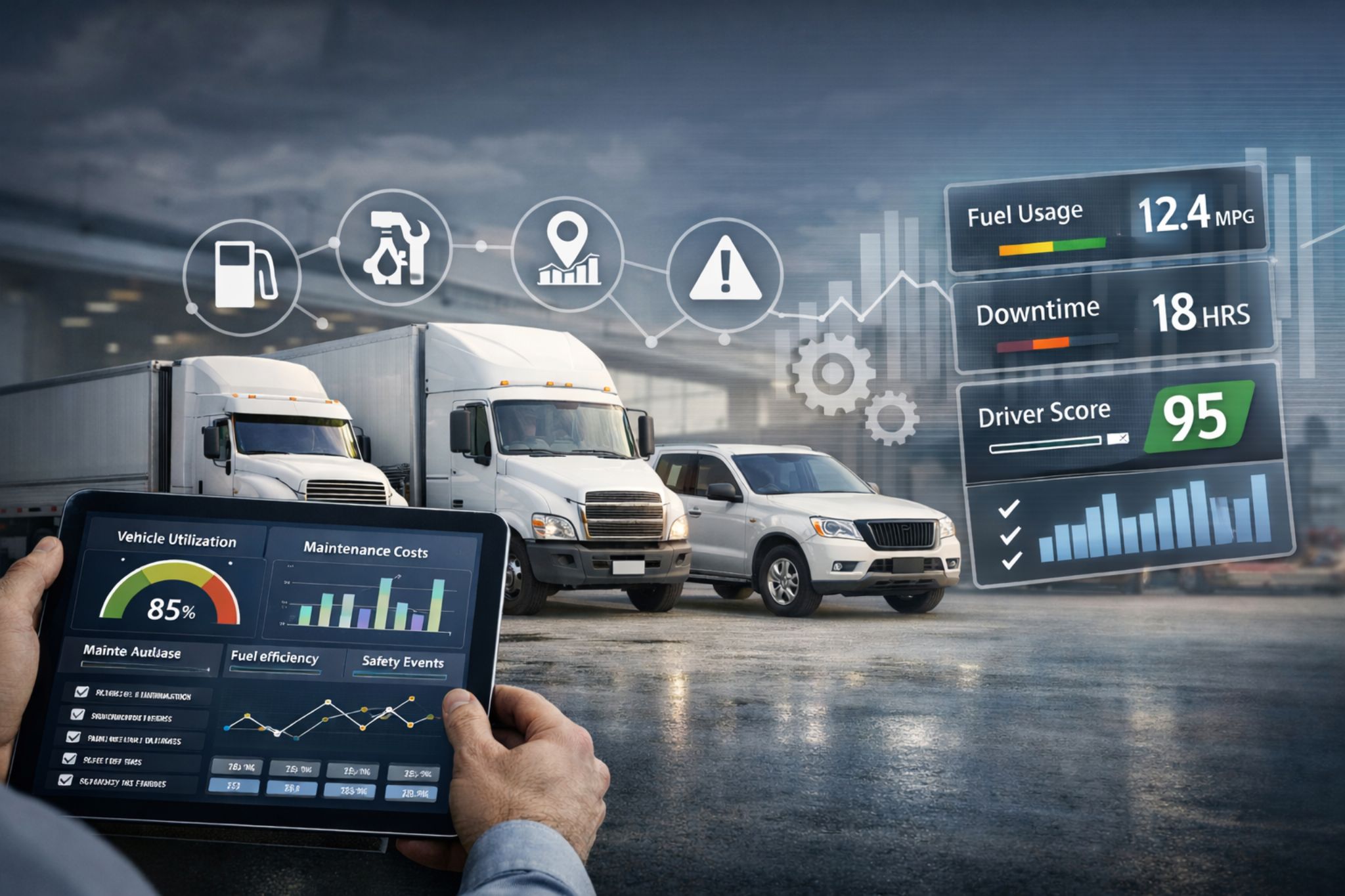
Common Fleet Performance Metrics and What They Indicate
| Performance Metric | What It Measures | Operational Insight | Typical Data Source |
|---|---|---|---|
| Vehicle Utilization Rate | Time vehicles are actively used | Fleet productivity level | Telematics system |
| Maintenance Cost per Mile | Maintenance spend per distance traveled | Asset operating efficiency | Maintenance software |
| Fuel Efficiency | Fuel consumed per mile | Fuel usage patterns | Fuel tracking system |
| Vehicle Downtime Rate | Time vehicles are unavailable | Reliability of fleet assets | Maintenance records |
| Driver Safety Events | Harsh braking, speeding, incidents | Driver behavior trends | Telematics platform |
Manual Fleet Performance Tracking vs Software-Based Fleet Monitoring

Manual Fleet Performance Tracking
Data visibility
- Data stored in spreadsheets or paper records
- Difficult to consolidate across vehicles
- Limited real-time insight
Operational impact
- Higher administrative workload
- Delayed identification of performance issues
- Increased risk of incomplete or inconsistent records
Software-Based Fleet Monitoring
Data visibility
- Centralized fleet data in one system
- Automated performance tracking across vehicles
- Real-time operational visibility
Operational impact
- Faster identification of performance trends
- Reduced manual reporting tasks
- Improved decision-making using accurate fleet data
What Fleet Performance Monitoring Means in Fleet Operations
Fleet performance monitoring provides a structured approach to measuring how effectively vehicles, drivers, and maintenance processes operate across the fleet. It enables operations teams to evaluate operational efficiency, asset reliability, and cost performance using measurable indicators.
Key aspects of fleet performance monitoring typically include:
- Tracking vehicle utilization across different routes or job assignments
- Monitoring maintenance performance and service intervals
- Evaluating driver behavior and safety events
- Measuring fuel consumption and operating efficiency
- Identifying downtime patterns and operational disruptions
Operational outcomes often include:
- Improved visibility into fleet activity
- Faster identification of performance issues
- More consistent operational reporting
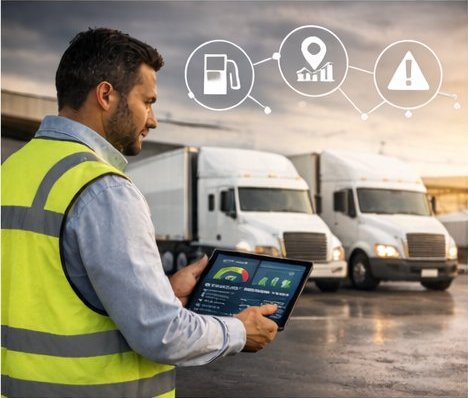
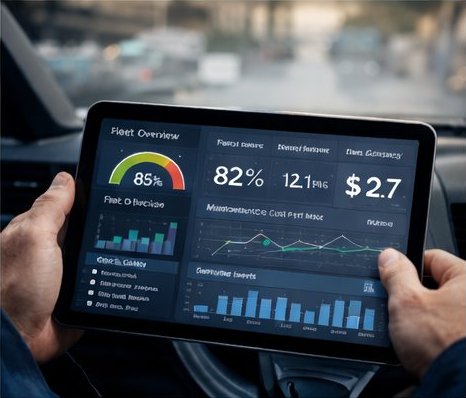
Key Operational Metrics Used in Fleet Performance Monitoring
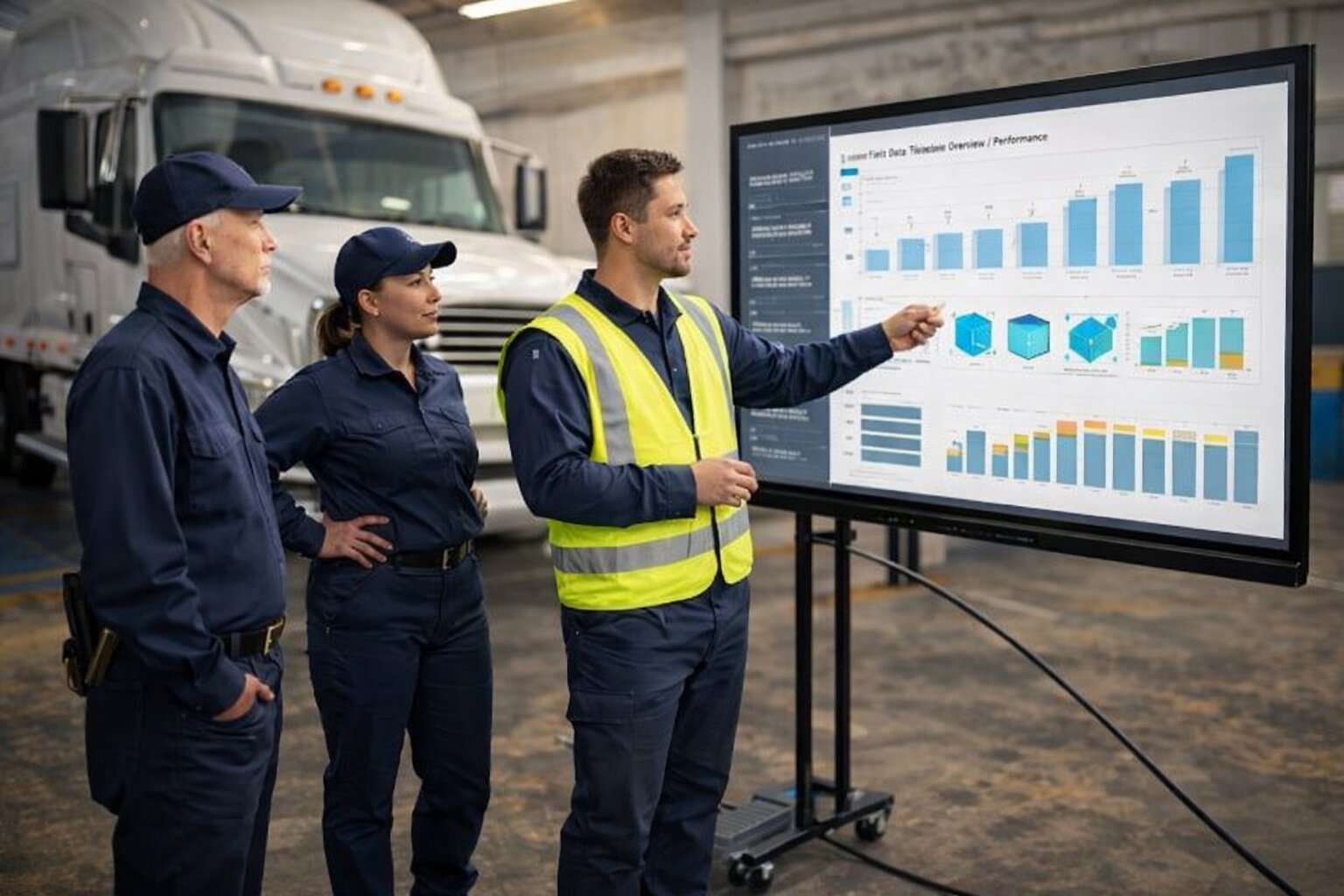
Fleet performance monitoring relies on a defined set of key performance indicators (KPIs) that help operations teams evaluate fleet efficiency, reliability, and cost performance.
Common performance metrics used in fleet operations include:
- Vehicle utilization rate across the fleet
- Maintenance cost per mile or per vehicle
- Average fuel consumption and fuel cost per mile
- Frequency of driver safety events or violations
- Average vehicle downtime per month
Monitoring these metrics helps fleet managers:
- Identify underutilized or overused vehicles
- Detect rising maintenance costs early
- Improve driver safety and accountability
- Track operational efficiency trends over time
Consistent monitoring also supports more accurate fleet planning and resource allocation.
Tools and Systems Used to Monitor Fleet Performance
Fleet performance monitoring typically combines multiple operational systems that collect and consolidate fleet data. These tools provide the data sources needed to analyze fleet activity and performance metrics.
Common systems used in fleet performance monitoring include:
- Telematics devices that track location, speed, and vehicle activity
- Maintenance management platforms that record service history and repairs
- Fuel management systems that track fuel consumption and costs
- Driver safety monitoring tools that record safety events
- Inspection and compliance systems that track vehicle inspections
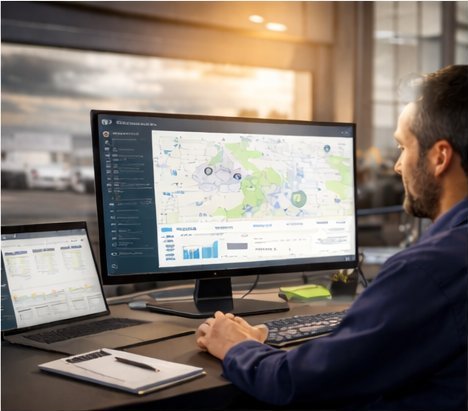
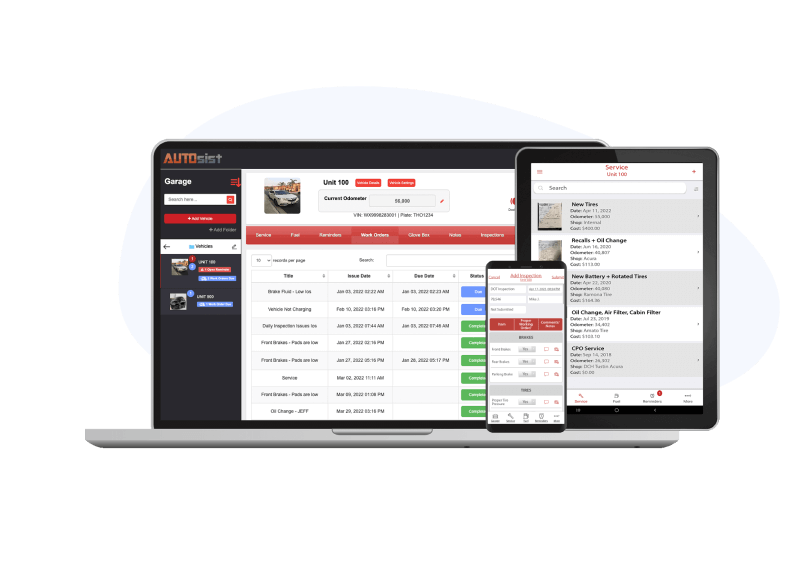
Fleet management platforms help centralize this information by integrating multiple data sources into a single operational view. Systems such as fleet maintenance software allow operations teams to track maintenance records, service schedules, and asset performance across the entire fleet.
Operational benefits of centralized monitoring include:
- Reduced data fragmentation
- Faster access to performance reports
- Improved coordination between operations and maintenance teams

Implementing Fleet Performance Monitoring Across a Fleet
Implementing fleet performance monitoring requires establishing clear operational processes for collecting, tracking, and reviewing fleet data.
A structured implementation process typically includes:
- Defining the key performance metrics the organization will track
- Standardizing maintenance records and service documentation
- Installing telematics or tracking systems where appropriate
- Creating consistent reporting procedures for fleet performance
- Assigning responsibility for reviewing and analyzing performance data
Operational steps often involve:
- Establishing monthly or weekly performance reporting cycles
- Integrating maintenance and telematics data sources
- Creating dashboards or reporting views for operations teams
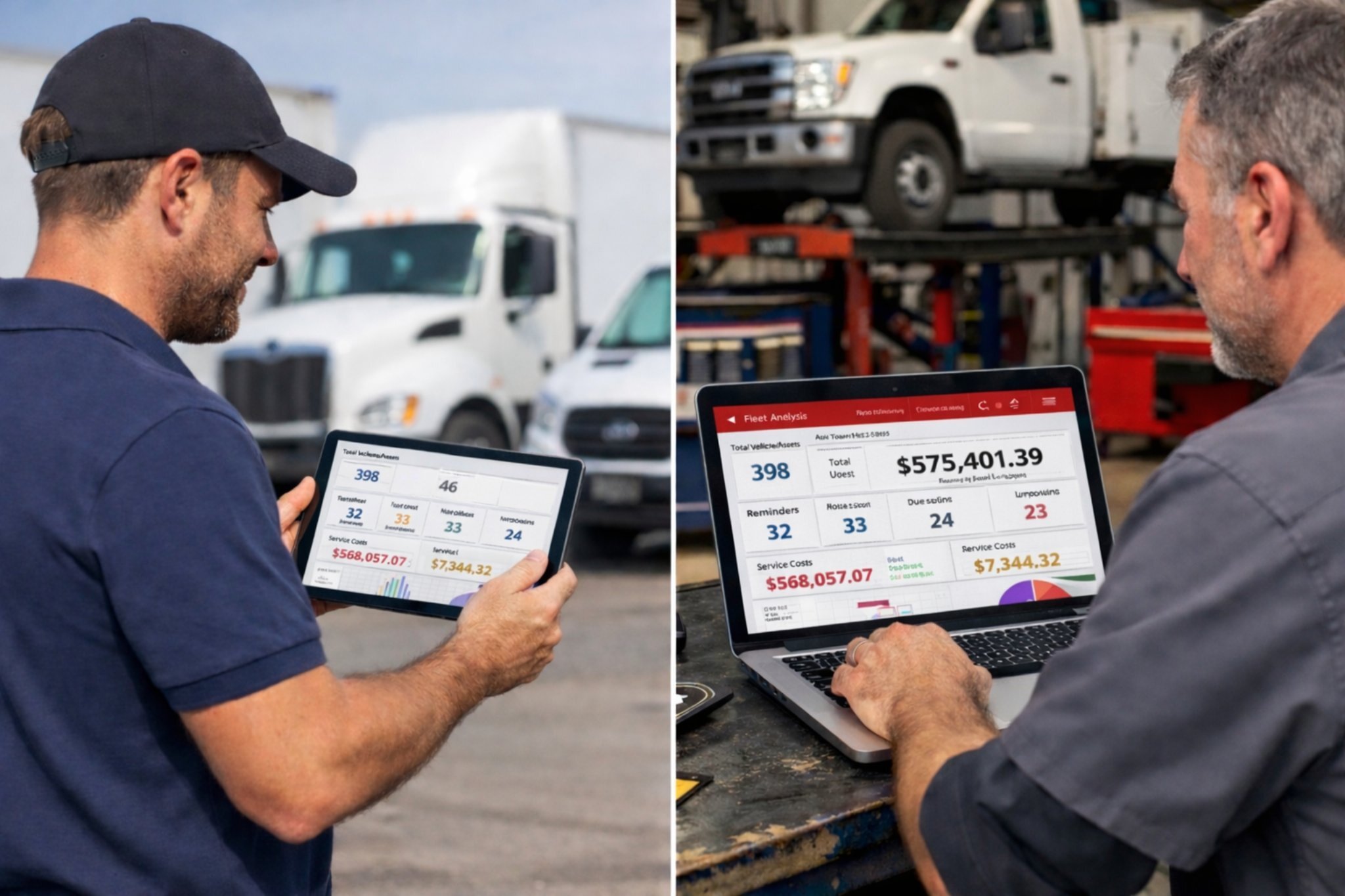
Fleet teams often reference resources such as the fleet management guide when establishing monitoring frameworks and operational procedures.
Using Fleet Performance Data to Improve Operational Outcomes
Once performance data is consistently collected, fleet managers can use that information to improve operational outcomes and reduce inefficiencies.
Fleet performance data can support improvements such as:
- Adjusting maintenance schedules based on vehicle usage patterns
- Identifying vehicles with unusually high repair costs
- Improving driver safety training using behavior data
- Optimizing vehicle allocation across routes or projects
- Detecting operational bottlenecks that affect productivity
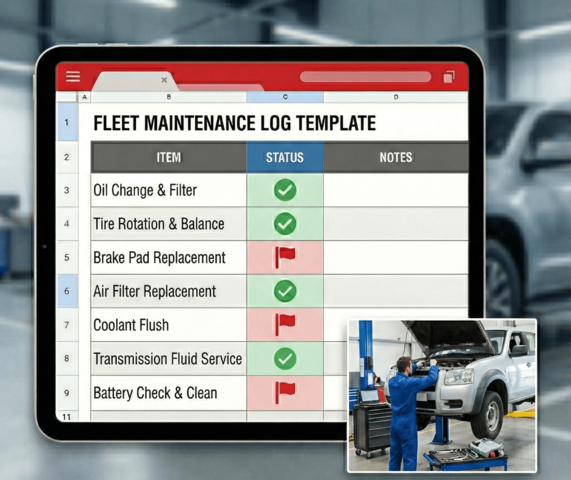
Fleet teams may also use structured tools such as a fleet maintenance log template to standardize maintenance tracking and support performance analysis.
Operational benefits of performance-driven management include:
- Reduced vehicle downtime
- Improved fleet reliability
- Better long-term cost control
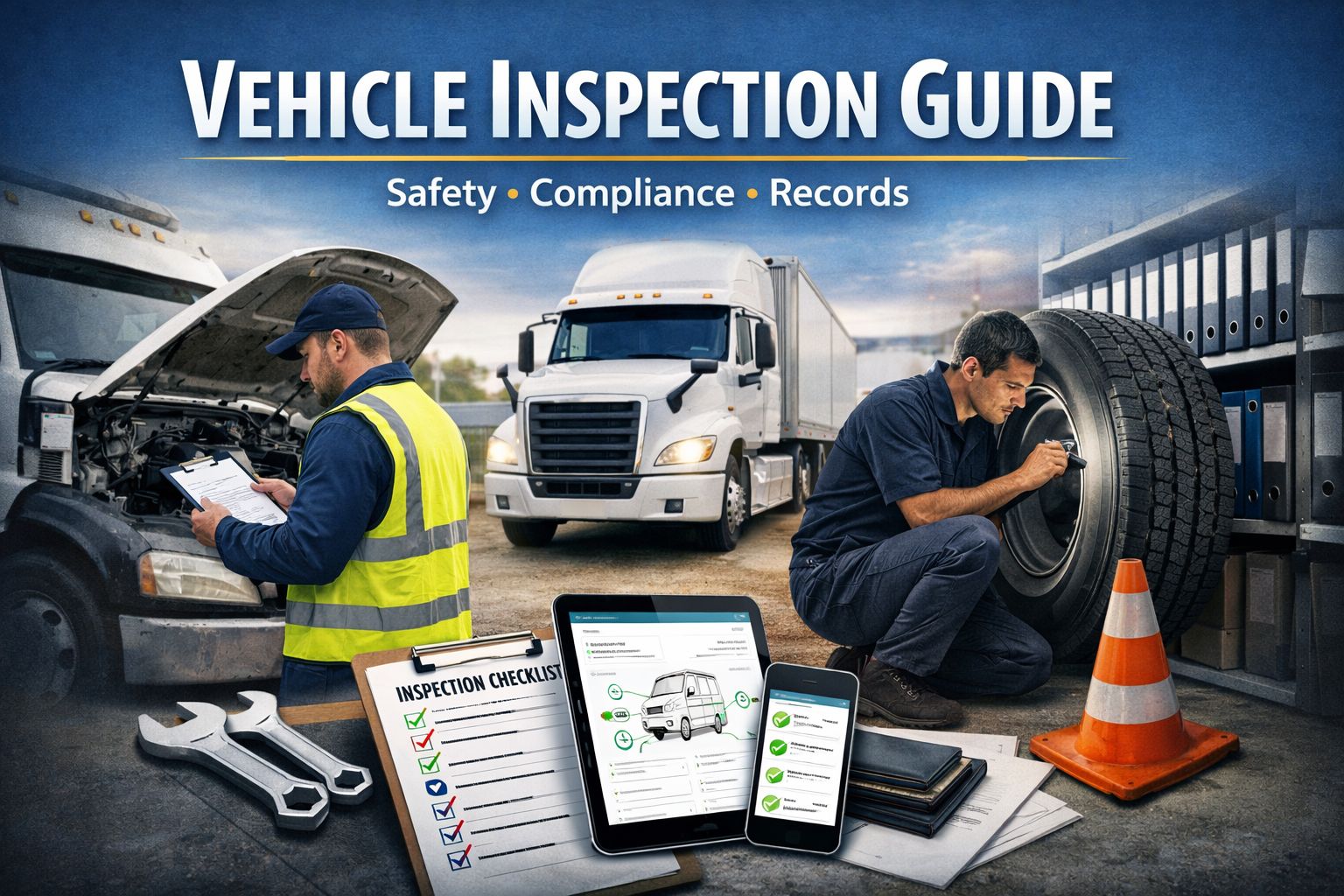
For organizations developing performance monitoring strategies, additional operational guidance can be found in resources like the vehicle inspection guide, which outlines inspection and maintenance monitoring practices that contribute to fleet performance visibility.
Final Takeaways
Fleet performance monitoring provides the operational visibility required to manage vehicles, drivers, and maintenance processes effectively. By tracking key performance indicators and consolidating fleet data, organizations can identify inefficiencies and improve operational outcomes.
Key practical takeaways include:
- Fleet performance monitoring relies on measurable operational metrics.
- Centralized fleet data improves performance visibility.
- Maintenance, fuel, and driver behavior metrics all influence fleet efficiency.
- Regular performance reporting supports better operational decisions.
- Integrated fleet systems simplify performance monitoring across the organization.
AUTOsist Fleet Management Resources
Fleet Management Guide
Vehicle Inspection Guide
Fleet Maintenance Log Template
Fleet Maintenance Software