Fleet Mechanic Software Features
Fleet mechanic software provides digital systems that help maintenance teams manage vehicle service tasks, repair documentation, inspections, and parts tracking across a fleet. These systems improve maintenance coordination, reduce downtime risk, and provide operational visibility into vehicle health and service activity.
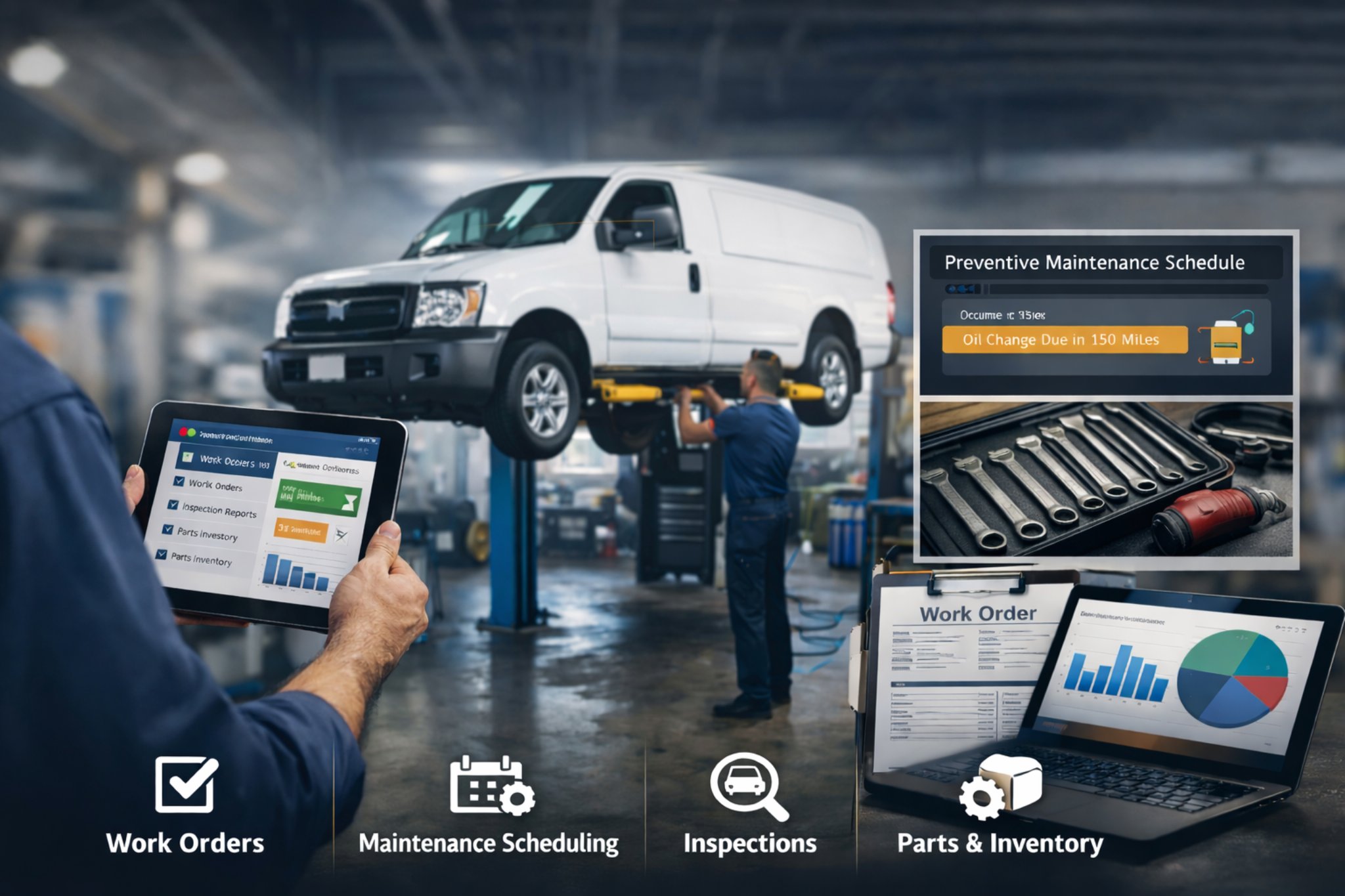
Core Fleet Mechanic Software Feature Categories
| Feature Category | Operational Purpose | Typical Users | Operational Outcome |
|---|---|---|---|
| Work Order Management | Organize repair tasks | Mechanics, supervisors | Structured maintenance workflow |
| Preventive Maintenance | Schedule service intervals | Fleet managers | Reduced unplanned downtime |
| Inspection Management | Record vehicle inspections | Drivers, technicians | Early issue detection |
| Parts & Inventory Tracking | Monitor parts usage | Maintenance teams | Parts availability visibility |
| Service History Records | Store repair documentation | Fleet managers | Long-term asset tracking |
Basic Maintenance Tracking Tools vs Integrated Fleet Mechanic Software
Basic Maintenance Tracking Tools
Maintenance Management
- Simple repair logs
- Limited scheduling capability
- Minimal inspection tracking
Operational Integration
- Isolated systems
- Limited reporting tools
- Minimal fleet visibility

Integrated Fleet Mechanic Software
Maintenance Management
- Work order lifecycle tracking
- Preventive maintenance automation
- Inspection and compliance management
Operational Integration
- Fleet-wide data integration
- Maintenance performance reporting
- Integration with telematics systems
What Fleet Mechanic Software Is in Fleet Operations
Fleet mechanic software is designed to manage the day-to-day maintenance activities required to keep fleet vehicles operational. It replaces fragmented maintenance tracking methods such as paper logs, spreadsheets, and disconnected shop systems with a centralized maintenance management platform.
Key capabilities typically supported by fleet mechanic software include:
- Creating and managing digital work orders for repairs and service tasks
- Tracking vehicle service history and maintenance records
- Scheduling preventive maintenance based on time, mileage, or engine hours
- Recording inspection results and reported vehicle issues
- Monitoring parts usage and inventory levels
Operational outcomes commonly include:
- Improved coordination between fleet managers and maintenance teams
- Better visibility into vehicle health and maintenance status

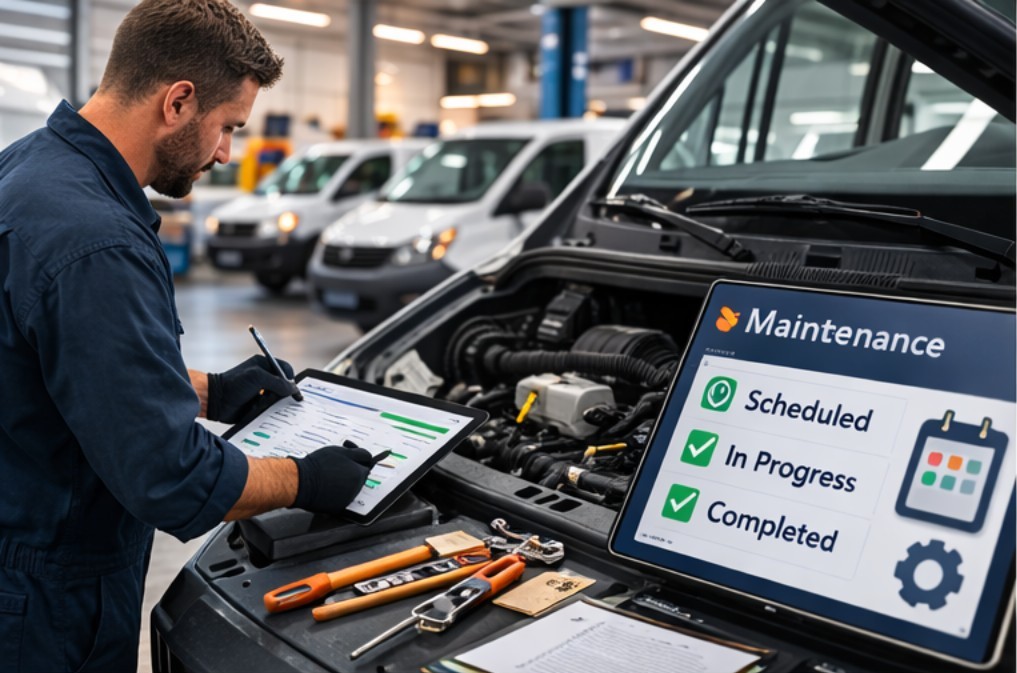
Core Maintenance Management Features Fleet Mechanics Rely On
Fleet mechanic software platforms include several core maintenance features that help mechanics manage repairs efficiently while maintaining accurate documentation across the fleet.
Typical maintenance management features include:
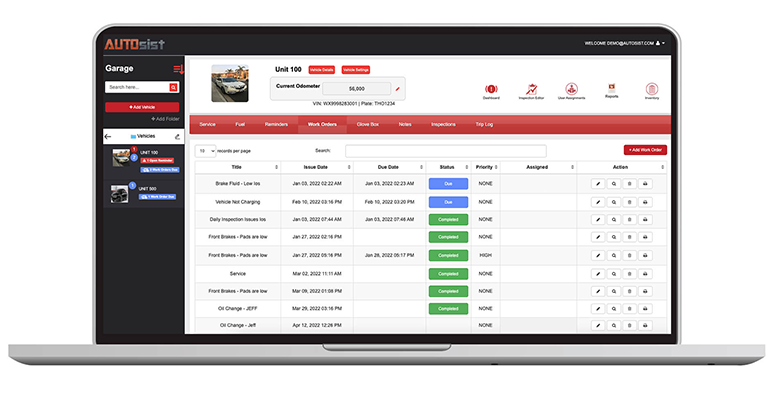
- Digital work order management that tracks repairs, service tasks, labor time, and associated parts
- Preventive maintenance scheduling based on mileage, time intervals, or equipment usage
- Vehicle inspection tracking that records driver-reported defects and technician findings
- Centralized service history records that document all completed repairs and maintenance activities
- Maintenance task prioritization tools that help maintenance teams organize workload
Operational outcomes often include:
- Standardized repair documentation across the fleet
- Improved maintenance workflow coordination
- Better historical visibility for asset lifecycle management
Operational Workflow Features That Support Maintenance Teams
Beyond maintenance tracking, fleet mechanic software often includes workflow tools that help maintenance teams coordinate repair tasks, manage shop workloads, and ensure maintenance processes are consistent.
Common workflow support features include:
- Work order assignment tools that allow supervisors to distribute repair tasks to mechanics
- Repair status tracking that shows whether vehicles are awaiting service, under repair, or completed
- Mobile access for technicians allowing maintenance updates directly from the workshop or yard
- Inspection defect tracking that links reported issues to maintenance tasks
- Maintenance approval workflows used for repair authorization and documentation
Operational outcomes may include:
- Improved shop coordination across maintenance teams
- Faster issue resolution and repair tracking
- Reduced communication gaps between drivers, mechanics, and fleet managers
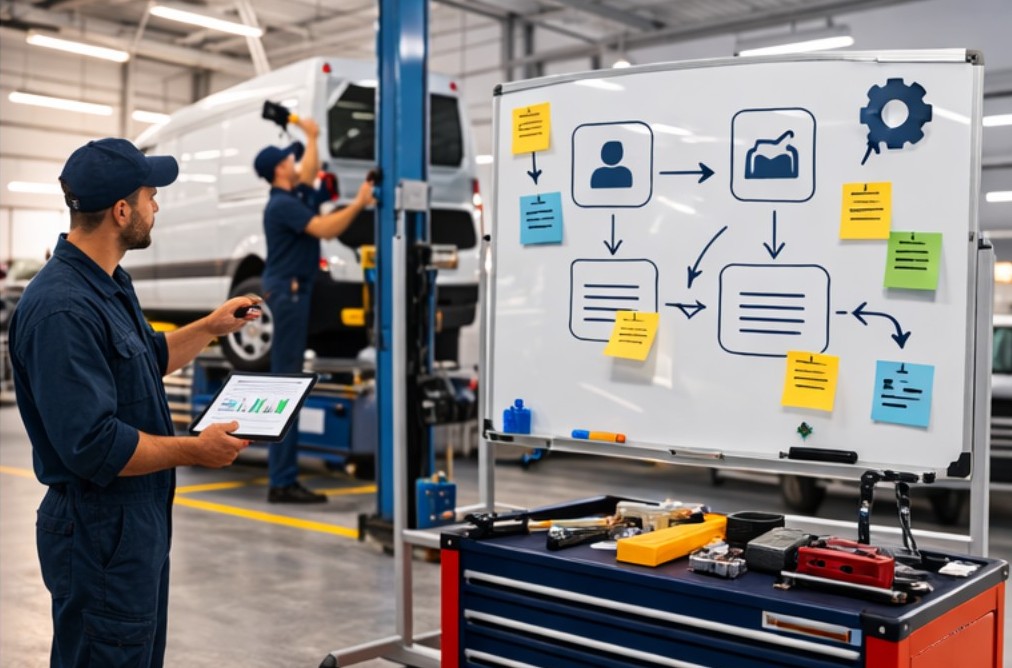

Data, Reporting, and Visibility Features for Fleet Maintenance
Fleet mechanic software also provides data and reporting capabilities that allow fleet managers to monitor maintenance activity, identify recurring issues, and evaluate vehicle reliability.
These visibility features help transform maintenance records into actionable operational insights.
Typical reporting capabilities include:
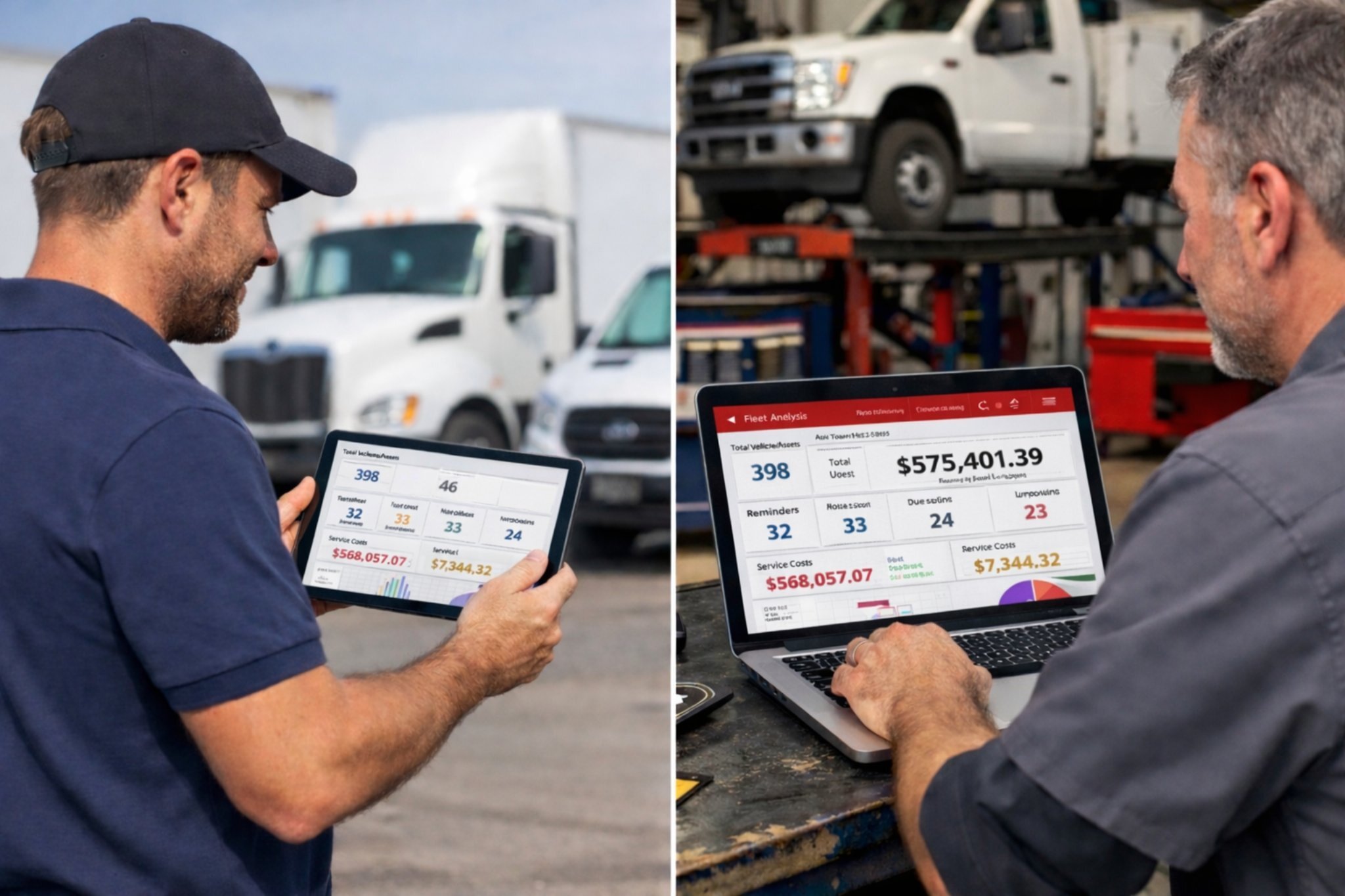
- Maintenance dashboards that summarize open work orders, service schedules, and vehicle status
- Repair history reports used to track long-term vehicle maintenance patterns
- Cost tracking tools that analyze maintenance spend by vehicle, asset type, or repair category
- Preventive maintenance compliance reports that monitor whether scheduled service is completed on time
- Downtime tracking metrics used to evaluate vehicle availability
Operational outcomes often include:
- Improved maintenance planning and scheduling
- Better understanding of asset reliability and lifecycle costs
- Data-driven maintenance decision-making
Implementing Fleet Mechanic Software in a Fleet Operation
Implementing fleet mechanic software typically involves transitioning from manual or fragmented maintenance tracking processes to a centralized maintenance management system. The implementation process usually includes system configuration, data migration, and workflow alignment with existing maintenance operations.
Key implementation steps often include:
- Importing fleet vehicle records and historical service data
- Defining preventive maintenance schedules and service intervals
- Configuring work order workflows for repair tracking
- Training maintenance teams on digital inspection and service documentation
- Establishing reporting dashboards for fleet maintenance monitoring
Operational outcomes commonly include:
- More structured maintenance processes
- Reduced administrative effort in maintenance tracking
- Improved visibility into fleet maintenance performance

Final Takeaways
Fleet mechanic software supports structured maintenance management by providing tools for service scheduling, repair documentation, and maintenance performance monitoring across a fleet.
Key operational takeaways include:
- Centralized maintenance systems improve repair coordination and recordkeeping.
- Preventive maintenance scheduling helps reduce unplanned vehicle downtime.
- Work order management improves maintenance workflow tracking.
- Inspection and defect reporting supports early issue identification.
- Maintenance reporting enables better fleet performance monitoring.
AUTOsist Fleet Management Resources

Fleet Performance Monitoring Guide
Fleet Tracking Solutions Guide
Fleet Maintenance Log Template
Fleet Maintenance Work Order Software