Fleet Management Software Cost Breakdown
Fleet management software costs vary depending on fleet size, operational complexity, and the capabilities required to manage vehicles, drivers, and maintenance effectively. Understanding how pricing is structured helps fleet managers evaluate total operational value rather than focusing only on subscription fees.
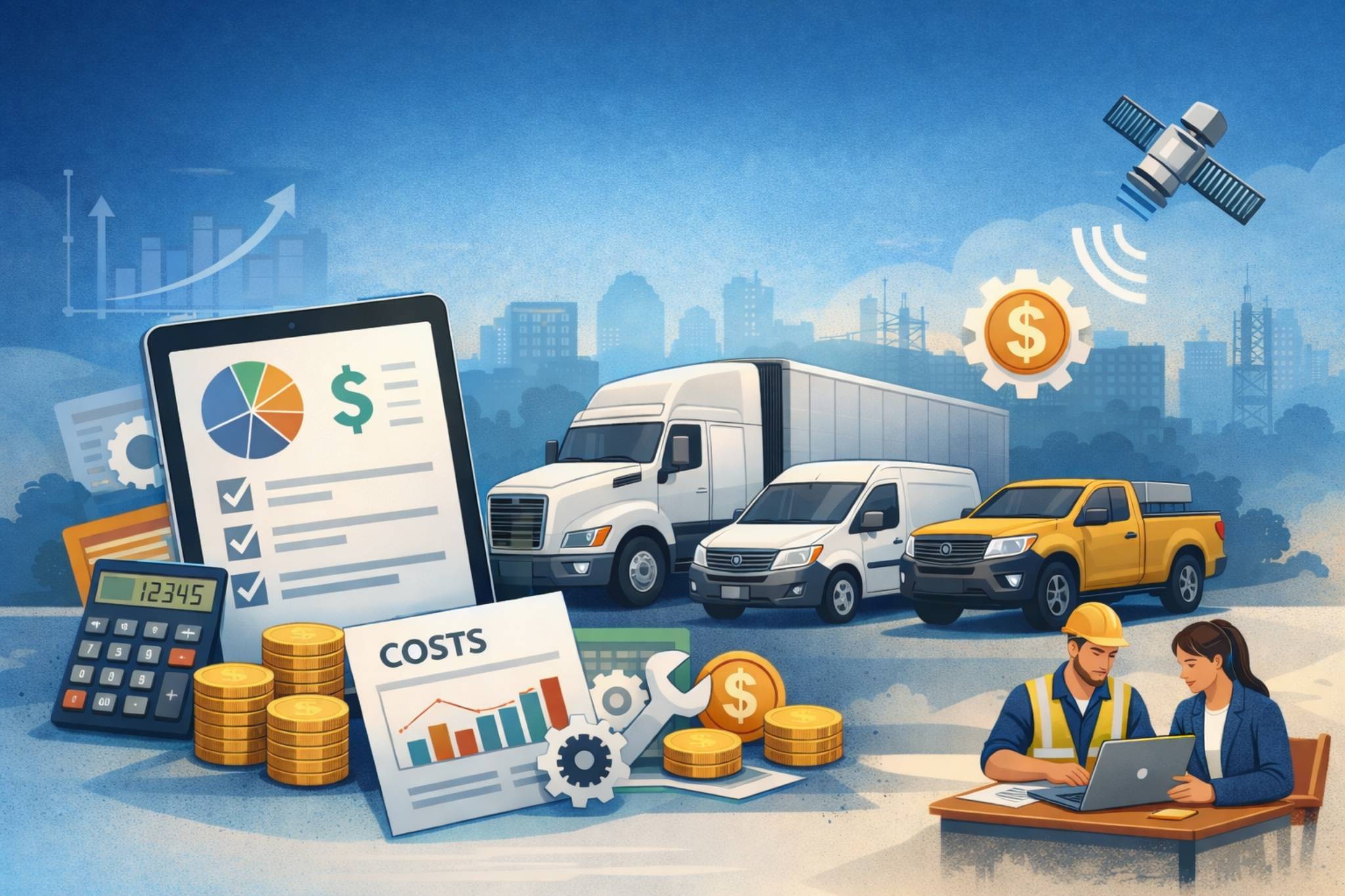
Typical Cost Drivers in Fleet Management Software
| Cost Driver | What It Includes | Operational Value | Cost Impact Level |
|---|---|---|---|
| Maintenance management | Service schedules and repair tracking | Reduces downtime and missed maintenance | High |
| Vehicle inspections | Digital inspections and DVIR workflows | Improves safety and compliance | Medium |
| GPS telematics integration | Real-time vehicle tracking and data | Enhances operational visibility | Medium |
| Reporting and analytics | Fleet dashboards and reports | Supports data-driven decisions | Medium |
| Driver management | Driver records and accountability tools | Improves compliance and oversight | Low to Medium |
Standalone Fleet Tools vs Integrated Fleet Management Platform
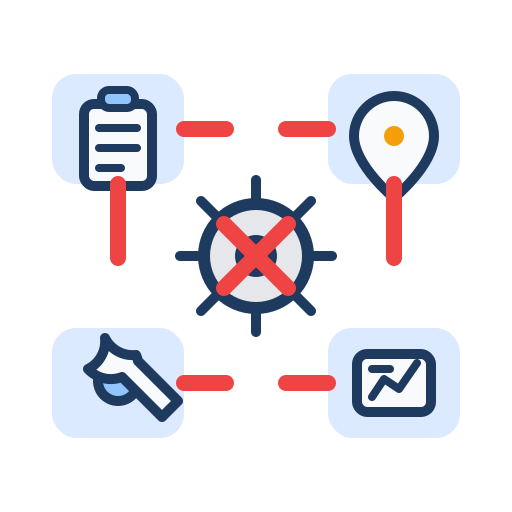
Standalone Fleet Tools
- Separate systems for inspections
- Separate systems for GPS tracking
- Disconnected maintenance records
- Multiple subscriptions and vendors

Integrated Fleet Platform
- Unified maintenance and inspections
- Integrated telematics data
- Centralized fleet documentation
- Single operational platform
What Determines the Cost of Fleet Management Software
Fleet management software pricing is influenced by several operational and technical factors. Vendors typically align pricing with the number of vehicles, feature modules required, and integration complexity across the fleet operation.
Common cost drivers include:
- Fleet size and asset volume
Larger fleets typically require scalable systems that manage more vehicles, equipment, and drivers.
- Feature scope and modules
Advanced modules such as maintenance automation, inspections, and analytics increase platform capability and pricing.
- Integration requirements
Integration with telematics providers, fuel cards, or other operational systems can affect software complexity and cost.
- Operational workflows
Fleets that automate inspections, maintenance planning, and reporting may require additional configuration and features.
Operational outcomes typically include:
- Better maintenance visibility
- Improved compliance oversight
- Reduced manual administrative workload
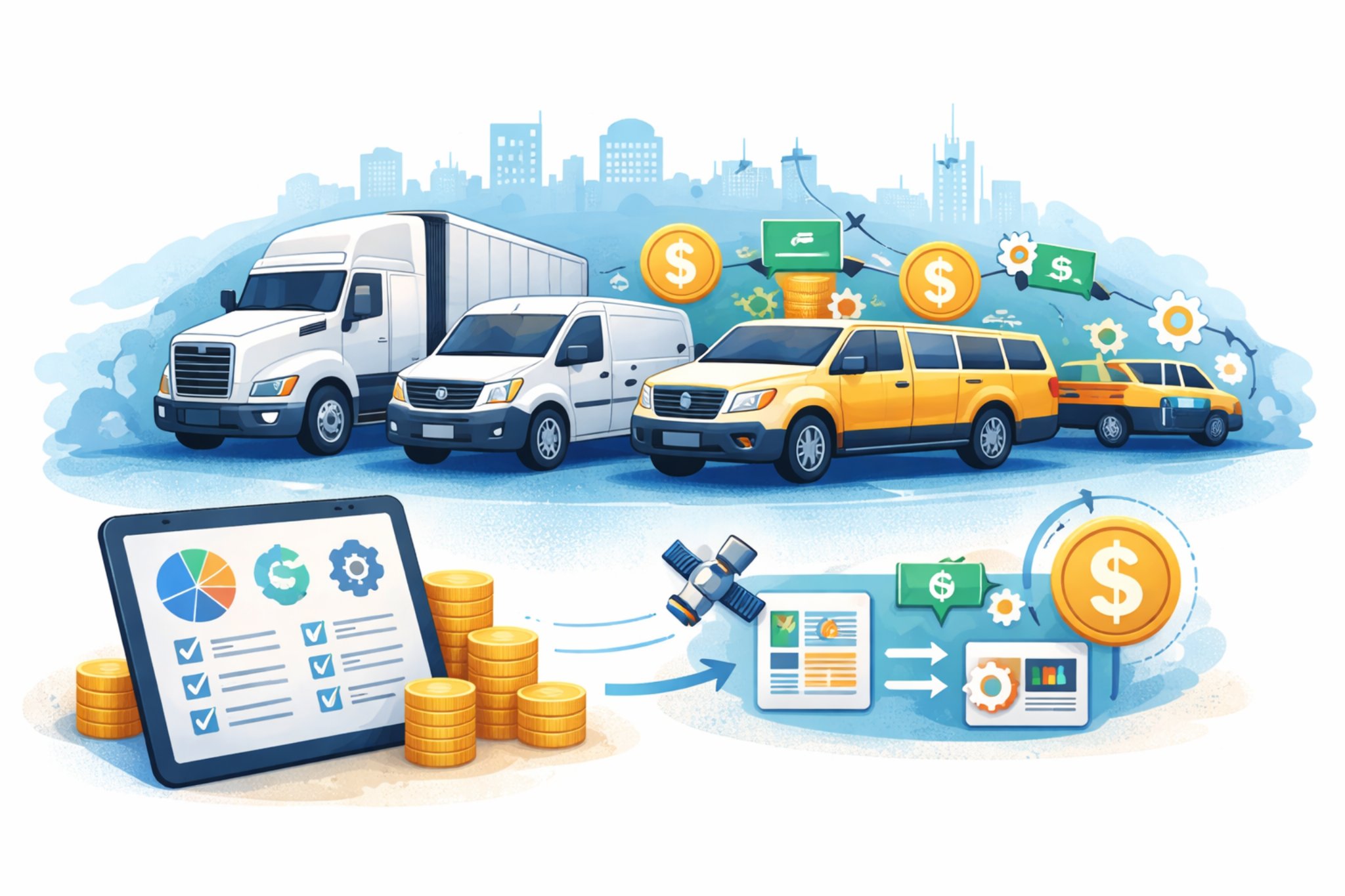
Typical Pricing Models Used by Fleet Software Providers
Fleet management software vendors commonly structure pricing in several ways depending on their product architecture and target fleet size.
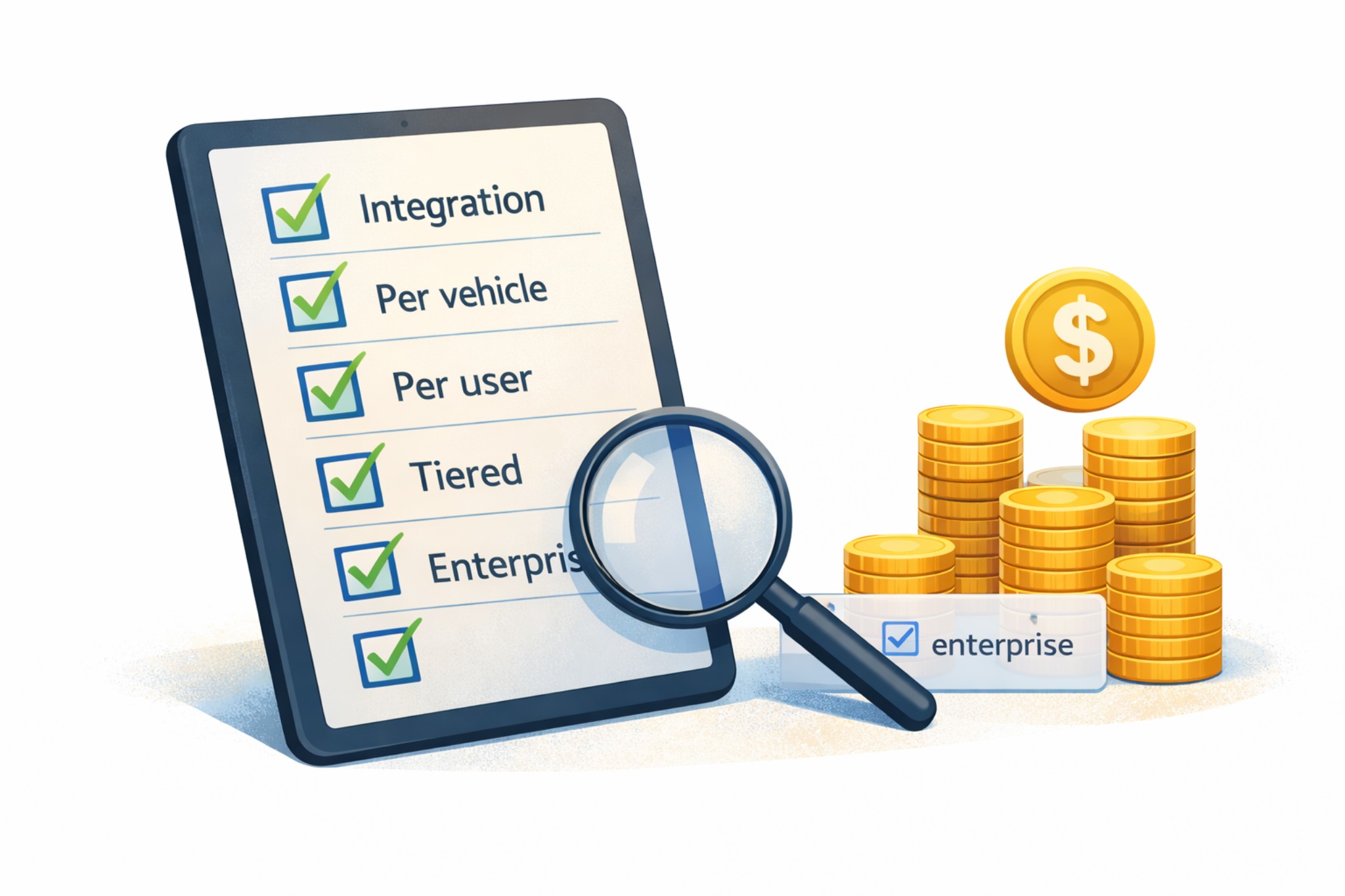
Typical pricing structures include:
- Per-vehicle pricing models
A monthly fee is charged for each vehicle or asset managed within the system.
- Per-user licensing
Pricing is based on the number of users accessing the platform, such as fleet managers, technicians, or drivers.
- Tier-based subscription plans
Platforms may offer pricing tiers that unlock additional capabilities such as analytics, telematics integration, or inspection tools.
- Enterprise licensing structures
Large fleets may negotiate customized pricing that includes advanced integrations and support services.
Typical results of these models include:
- Predictable monthly operating costs
- Scalability as fleets grow
- Flexible feature access depending on operational needs
Core Cost Components of a Fleet Management Software Platform
Fleet management platforms typically combine several operational systems into a single environment. Each component contributes to the overall software cost but also replaces manual processes or disconnected tools.
Common cost components include:
- Maintenance management systems
Platforms automate service scheduling, track repair history, and maintain centralized maintenance records. Many fleets transition to software after learning how manual tracking creates operational risk in systems described in the guide to what is fleet maintenance software.
- Driver and compliance management tools
These modules track driver documentation, safety inspections, and operational compliance requirements.
- Vehicle inspections and condition reporting
Digital inspection workflows replace paper checklists and allow fleets to maintain consistent inspection records using standardized procedures such as a vehicle inspection checklist.
- Reporting and operational analytics
Reporting tools analyze fleet data such as maintenance costs, downtime, and vehicle utilization.
Typical operational improvements include:
- Centralized fleet documentation
- Improved maintenance scheduling visibility
- Better decision-making through fleet analytics

Hidden or Secondary Costs Fleet Managers Should Evaluate
Beyond the base subscription price, fleets should consider operational factors that affect the total cost of implementing fleet management software.
Key areas to evaluate include:
- Implementation and onboarding
Initial setup may include configuring vehicle records, driver accounts, and inspection workflows.
- Data migration from legacy systems
Fleets transitioning from spreadsheets or legacy platforms may require structured data import and validation.
- Staff training and workflow changes
Maintenance teams and drivers must adapt to new inspection processes, reporting tools, and operational procedures.
- Integration with telematics or fuel systems
Connecting telematics data or GPS tracking platforms can require additional configuration or subscription services.
These costs typically lead to long-term operational benefits such as:
- Improved operational standardization
- Reduced administrative workload
- Better fleet visibility and accountability
How Software Investment Compares to Manual Fleet Management
Fleet managers often compare the cost of software with existing manual processes such as spreadsheets, paper inspection forms, or disconnected operational tools.
Operational differences often include:
- Manual data entry requirements
Spreadsheet systems require continuous updates and manual reconciliation.
- Limited maintenance visibility
Without automation, service intervals and maintenance records are difficult to monitor consistently.
- Fragmented operational data
Maintenance, inspections, driver data, and GPS tracking may exist in separate systems.
- Higher administrative workload
Fleet managers must manually compile reports and track compliance documentation.
Many organizations evaluate software solutions to standardize processes described in a fleet management software buyer's guide when determining long-term operational value.

Final Takeaways
Fleet management software pricing varies widely depending on operational scope, integration needs, and the number of vehicles managed. Evaluating cost drivers alongside operational benefits provides a clearer understanding of total fleet software value.
Key points to consider:
- Software pricing typically scales with fleet size and feature requirements.
- Integrated platforms often replace multiple standalone tools and subscriptions.
- Implementation and integration costs should be considered when evaluating total cost.
- Maintenance automation and reporting capabilities typically deliver the greatest operational value.
- Long-term savings often come from improved maintenance planning and operational visibility.
AUTOsist Fleet Management Resources
What is Fleet Maintenance Software

Fleet Management Software Buyer's Guide

Vehicle Inspection Checklist
Fleet Management Software