Fleet Maintenance Scheduling Strategy
Fleet maintenance scheduling strategy defines how maintenance activities are planned, triggered, and executed to maintain vehicle reliability, minimize downtime, and ensure compliance across fleet operations.

Maintenance Scheduling Workflow Overview
| Stage | Key Activity | Responsible Role | Output |
|---|---|---|---|
| Planning | Define service intervals | Fleet Manager | Maintenance plan |
| Scheduling | Assign tasks and timelines | Maintenance Coordinator | Scheduled work orders |
| Execution | Perform maintenance tasks | Technicians | Completed service records |
| Monitoring | Track performance and delays | Operations Manager | KPI reports |
| Optimization | Adjust schedules and strategy | Fleet Manager | Updated maintenance plan |
Manual Scheduling vs Software-Driven Scheduling

Manual Scheduling
Operational Characteristics
- Relies on spreadsheets or paper-based tracking
- Service intervals are manually calculated and updated
- Limited visibility across assets and locations
Operational Impact
- Higher risk of missed or delayed maintenance
- Increased administrative workload
- Limited scalability as fleet size grows

Software-Driven Scheduling
Operational Characteristics
- Automated scheduling based on time, mileage, or engine hours
- Centralized visibility across all assets
- Integration with inspection, telematics, and work order systems
Operational Impact
- Improved maintenance compliance and consistency
- Reduced manual errors and scheduling gaps
- Scalable processes across multiple locations
Types of Fleet Maintenance Scheduling Approaches
Fleet maintenance scheduling strategies are typically structured around how maintenance triggers are defined and executed across the fleet.
- Time-based scheduling Maintenance is performed at fixed calendar intervals regardless of usage
- Usage-based scheduling Maintenance is triggered by mileage, engine hours, or fuel consumption
- Condition-based scheduling Service is initiated based on inspection data or asset condition
- Predictive scheduling Uses historical and real-time data to anticipate failures before they occur
Operational outcome:
- Aligns maintenance frequency with asset usage patterns
- Reduces unnecessary servicing and unexpected failures
- Improves lifecycle planning across mixed fleets

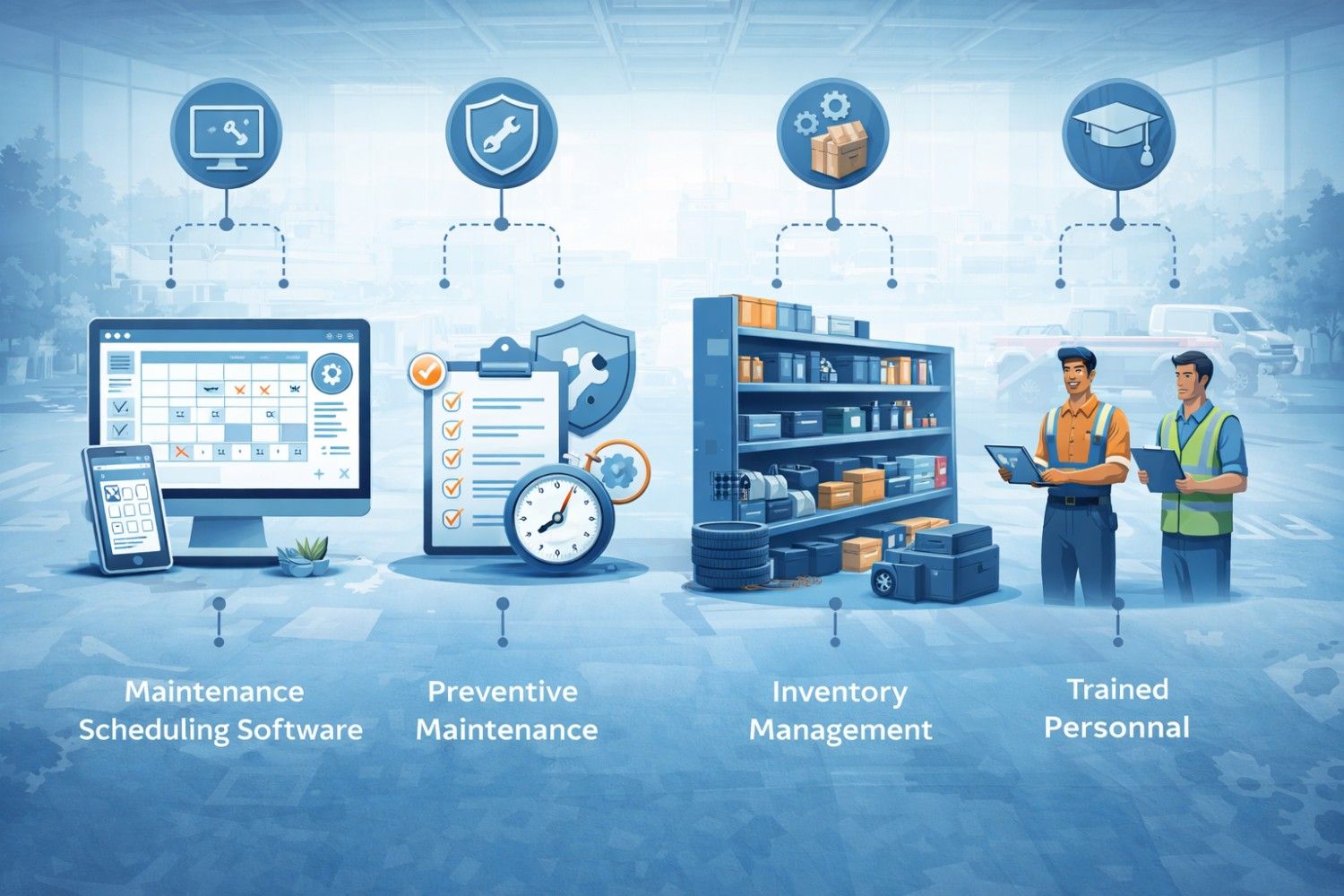
Core Components of an Effective Maintenance Scheduling Strategy
An effective scheduling strategy depends on accurate data, structured workflows, and coordination across operational functions.
- Asset and service interval definition Standardize maintenance intervals using OEM recommendations and operational data
- Work order management and prioritization Ensure tasks are scheduled, tracked, and completed systematically
- Parts and inventory coordination Align parts availability with scheduled maintenance to avoid delays
- Labor and shop capacity planning Balance technician availability with scheduled workload
- Data integration and visibility Maintain a centralized view of maintenance status and upcoming tasks
Operational outcome:
- Improved scheduling accuracy and execution consistency
- Reduced downtime due to planning gaps
- Better alignment between maintenance and operations
Building and Implementing a Maintenance Schedule
Implementing a scheduling strategy requires standardization, clear ownership, and system alignment.
- Define baseline service intervals Establish intervals based on usage, asset type, and operating conditions
- Standardize maintenance workflows Create repeatable processes for planning, scheduling, and execution
- Assign roles and responsibilities Clearly define ownership across fleet managers, coordinators, and technicians
- Integrate data sources Combine telematics, inspections, and service history for accurate scheduling
- Use structured planning tools Reference frameworks such as a to align intervals and processes
Operational outcome:
- Consistent execution of maintenance schedules
- Reduced variability across locations
- Improved compliance with service requirements


Monitoring, Adjusting, and Optimizing Scheduling Performance
Maintenance scheduling must be continuously evaluated and adjusted based on operational performance.
- Track key performance indicators Monitor downtime, maintenance compliance, and cost per mile using frameworks like
- Identify scheduling inefficiencies Detect missed services, backlog accumulation, and over-maintenance
- Adjust intervals based on performance data Refine schedules using real-world operating conditions
- Standardize reporting and reviews Conduct regular performance reviews to improve scheduling accuracy
- Align scheduling with operational goals Ensure maintenance supports utilization, safety, and cost control targets
Operational outcome:
- Continuous improvement in maintenance efficiency
- Reduced unplanned downtime
- Better cost control and asset utilization
Final Takeaways
A structured fleet maintenance scheduling strategy ensures maintenance is predictable, consistent, and aligned with operational demands.
- Define clear scheduling triggers based on time, usage, or condition
- Standardize workflows to ensure consistent execution
- Align parts, labor, and scheduling to avoid delays
- Continuously monitor KPIs and adjust schedules accordingly
- Use centralized systems to improve visibility and scalability
AUTOsist Fleet Management Resources

Preventive Maintenance Guide

Fleet Maintenance KPIs

Fleet Preventive Maintenance Schedules
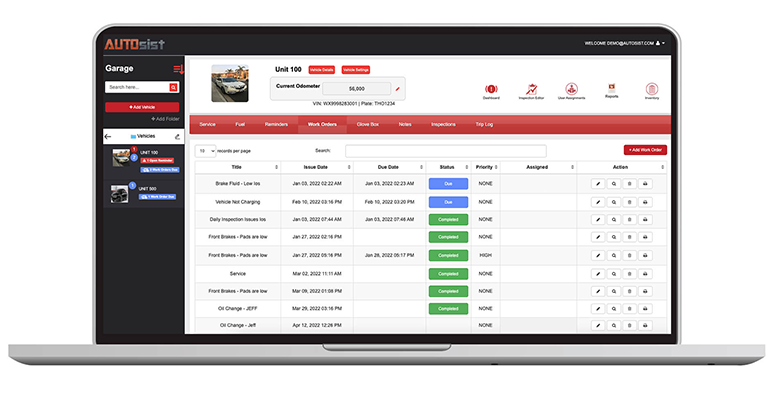
Fleet Maintenance Work Order Software