Fleet Lifecycle Management
Fleet lifecycle management refers to the structured oversight of vehicles from acquisition through operation, maintenance, and eventual replacement. Managing the full lifecycle allows fleets to control operating costs, maintain vehicle reliability, and make data-driven decisions about asset utilization and replacement timing.

Lifecycle Cost Drivers Across a Vehicle's Life
| Lifecycle Phase | Major Cost Drivers | Operational Impact | Management Priority |
|---|---|---|---|
| Acquisition | Purchase price | Capital allocation | Vehicle specification |
| Deployment | Fuel consumption | Operating efficiency | Route utilization |
| Maintenance | Service and repairs | Vehicle uptime | Preventive maintenance |
| Performance Monitoring | Operational data | Cost tracking | Lifecycle analysis |
| Replacement | Resale value | Fleet renewal | Asset transition |
Reactive Vehicle Replacement vs Lifecycle-Based Replacement

Reactive Vehicle Replacement
Decision Triggers
- Replacement occurs after repeated mechanical failures
- Decisions are typically triggered by operational disruption
- Minimal use of long-term performance or cost data
Operational Outcomes
- Higher risk of unexpected vehicle downtime
- Escalating repair costs late in the asset's life
- Unpredictable replacement budgeting

Lifecycle-Based Replacement
Decision Triggers
- Replacement determined by lifecycle cost thresholds
- Decisions supported by maintenance history and asset performance data
- Planned retirement based on predictable utilization patterns
Operational Outcomes
- Lower long-term operating costs
- Improved fleet availability and reliability
- More stable fleet budgeting and asset planning
What Fleet Lifecycle Management Means in Fleet Operations
Fleet lifecycle management coordinates the operational, financial, and maintenance aspects of vehicles throughout their service life. Fleet managers monitor vehicle utilization, maintenance history, and operational costs to determine how long assets should remain in service and when they should be replaced.
Lifecycle oversight usually includes several operational management practices:
- Tracking vehicle age, mileage, and utilization across the fleet
- Monitoring operating costs such as fuel, repairs, and downtime
- Evaluating long-term asset performance and reliability
- Identifying vehicles approaching end-of-life performance thresholds
- Planning replacement cycles that align with operational demand
These practices allow fleet managers to maintain operational continuity while avoiding unexpected asset failures.

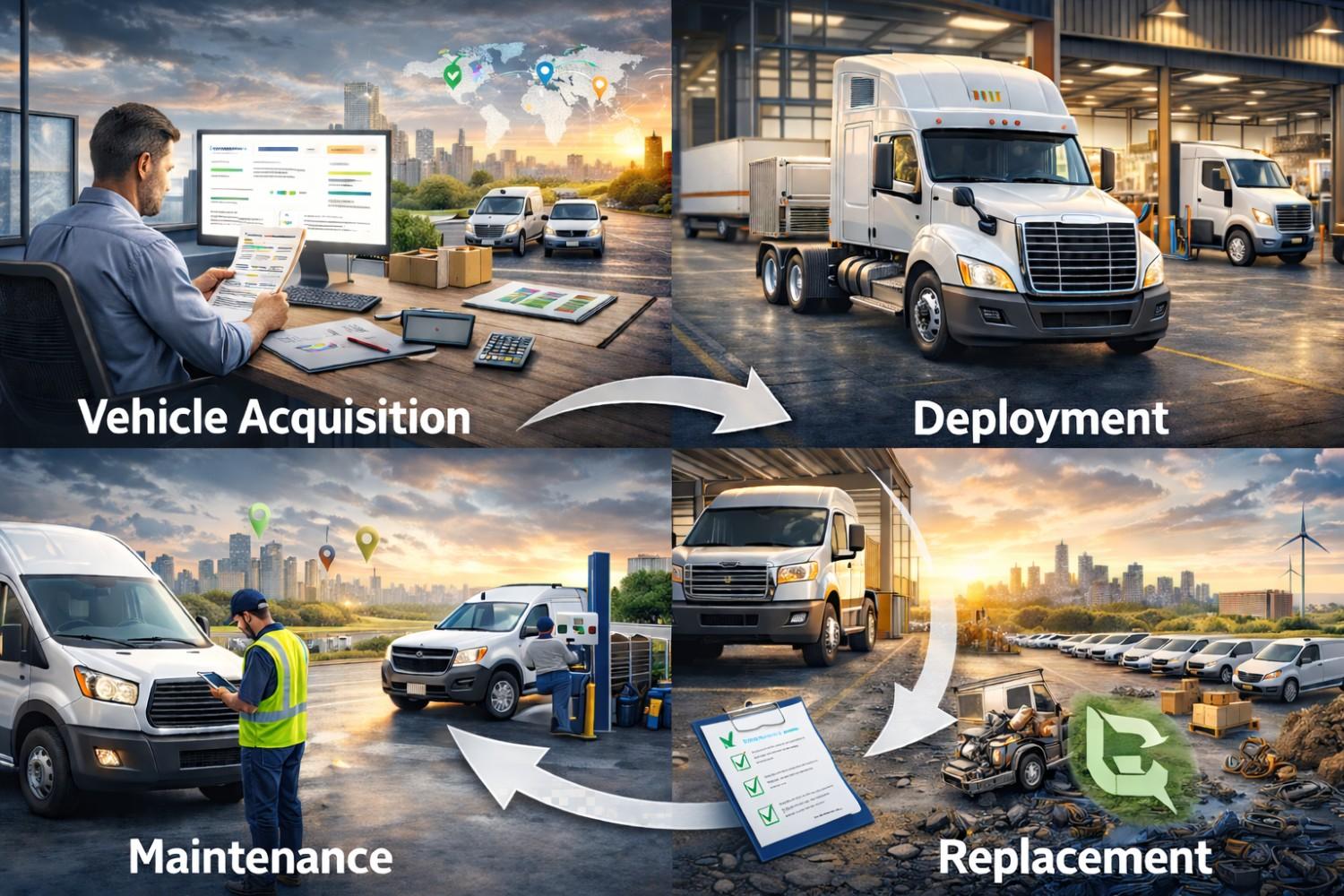
Key Stages of the Fleet Vehicle Lifecycle
Every vehicle in a fleet progresses through multiple operational stages from acquisition to retirement. Understanding these stages helps fleet managers apply the correct maintenance strategy and cost monitoring practices throughout the asset's service life.
Typical lifecycle stages include:
- Vehicle acquisition based on operational requirements and duty cycles
- Deployment into daily service across routes or operational locations
- Preventive maintenance scheduling to maintain vehicle reliability
- Continuous performance monitoring through operational data
- Planned replacement when lifecycle cost thresholds are reached
Maintaining structured maintenance planning and operational oversight during these stages helps fleets avoid excessive repair costs and service disruptions. Many fleets rely on structured maintenance frameworks described in the fleet maintenance SOP guide to standardize maintenance procedures across vehicles and teams.
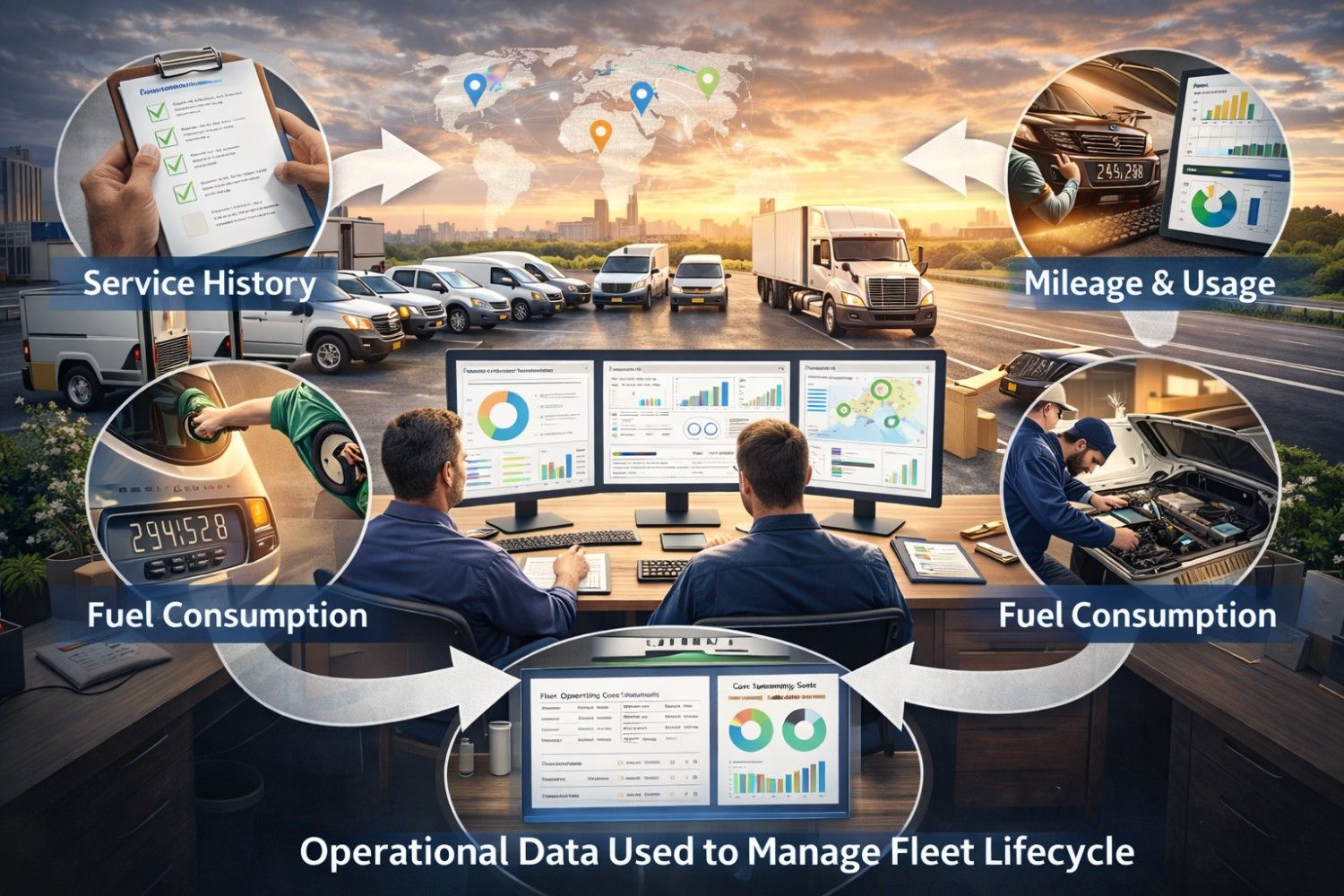
Operational Data Used to Manage the Fleet Lifecycle
Lifecycle decisions depend heavily on operational data that reveals how vehicles perform throughout their service life. Accurate data allows fleet managers to evaluate reliability trends, identify high-cost assets, and forecast replacement timing.
Key operational data sources used in lifecycle analysis include:
- Vehicle service history and maintenance records
- Mileage accumulation and utilization patterns
- Fuel consumption trends across vehicles
- Frequency of repairs and component failures
- Total operating cost per vehicle over time
Maintaining centralized and accessible service records is essential for this process. Systems designed for vehicle service history tracking allow fleet managers to monitor long-term asset performance and identify vehicles approaching the end of their efficient lifecycle.

Strategies for Extending Fleet Asset Life While Controlling Costs
Extending vehicle service life requires balancing maintenance investment with long-term operating costs. Fleets that manage this balance effectively can increase asset utilization without increasing downtime risk.
Common strategies used by fleet operations include:
- Implementing structured preventive maintenance programs
- Monitoring mechanical health through scheduled inspections
- Standardizing maintenance intervals across vehicle classes
- Addressing minor repairs before they escalate into major failures
- Monitoring cost per mile to identify declining asset efficiency
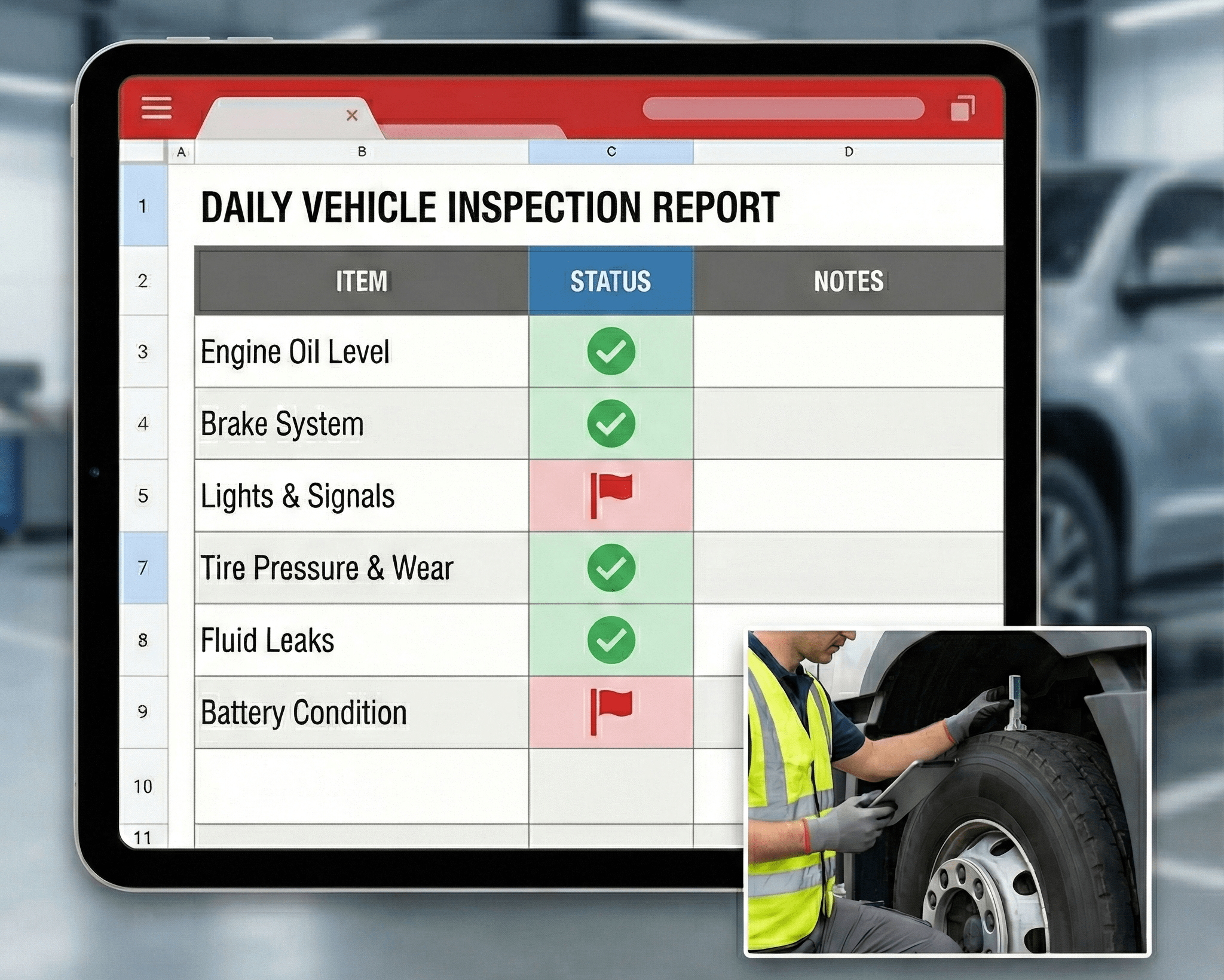
Many fleets use structured inspection processes supported by tools such as a daily vehicle inspection checklist to ensure maintenance issues are identified early and addressed consistently.
Implementing a Fleet Lifecycle Management Framework
A formal lifecycle management framework ensures vehicles are monitored consistently across acquisition, operation, maintenance, and retirement stages. This framework helps fleets maintain operational visibility while supporting long-term asset planning and budgeting.
Effective lifecycle frameworks typically include the following operational elements:
- Centralized tracking of vehicle specifications, purchase dates, and service records
- Standardized work order and maintenance management processes
- Continuous monitoring of utilization, cost per mile, and downtime metrics
- Data-driven evaluation of replacement timing and fleet renewal cycles
- Integration of lifecycle insights into overall fleet planning
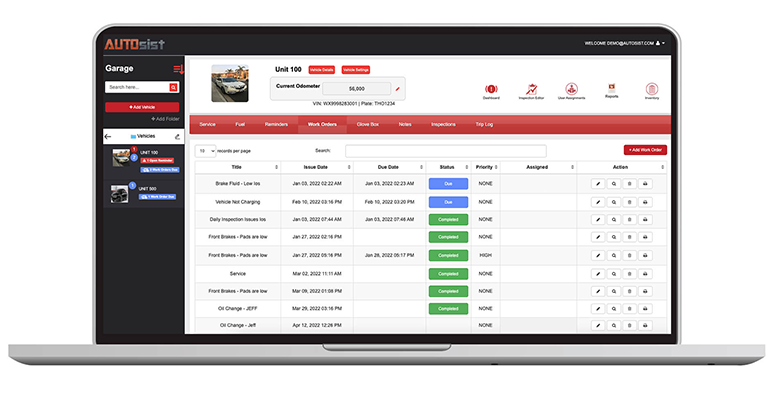
Fleet management platforms that consolidate maintenance data, inspections, and operational reporting can simplify lifecycle oversight. For example, systems supporting fleet maintenance work order management help fleets track service activities and maintain a clear operational history for each vehicle.

Final Takeaways
Fleet lifecycle management allows organizations to control operating costs, maintain vehicle reliability, and plan fleet renewal strategically. Managing the full lifecycle—from acquisition to retirement—ensures that fleet assets deliver maximum operational value.
Key operational takeaways include:
- Lifecycle oversight improves long-term fleet cost control.
- Preventive maintenance is essential for extending asset life.
- Operational data enables informed replacement decisions.
- Structured maintenance frameworks reduce unexpected downtime.
- Lifecycle planning supports predictable fleet renewal cycles.
AUTOsist Fleet Management Resources
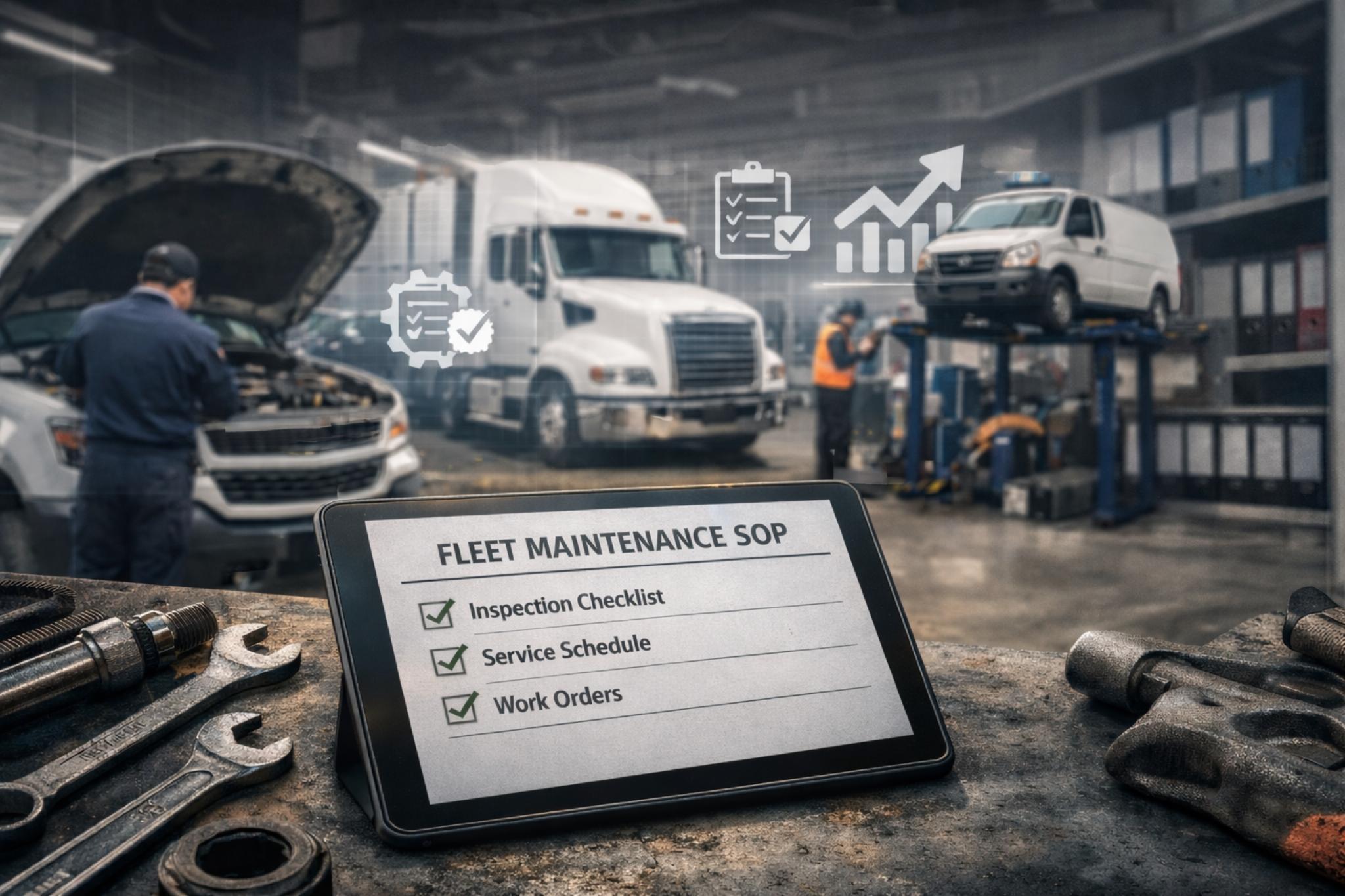
Fleet Maintenance SOP Guide
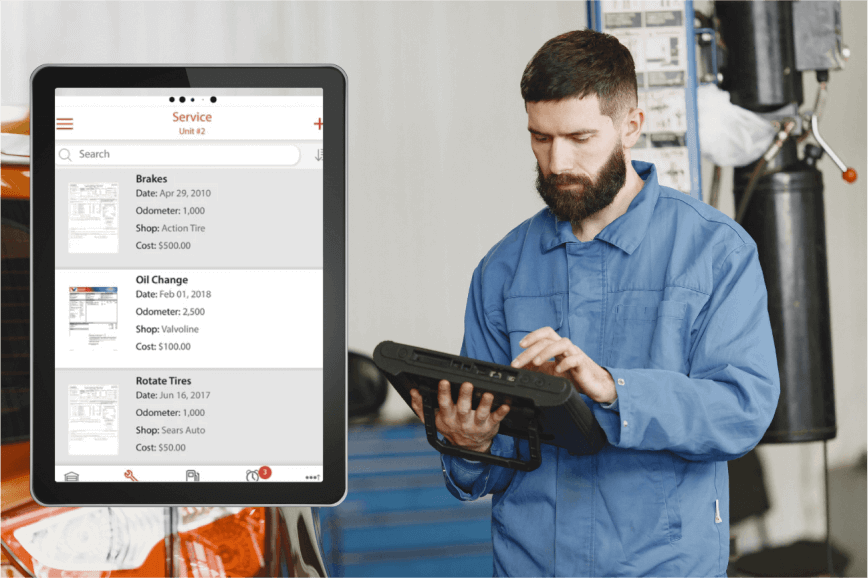
Vehicle Service History Tracking
Daily Vehicle Inspection Checklist
Fleet Maintenance Work Order Management