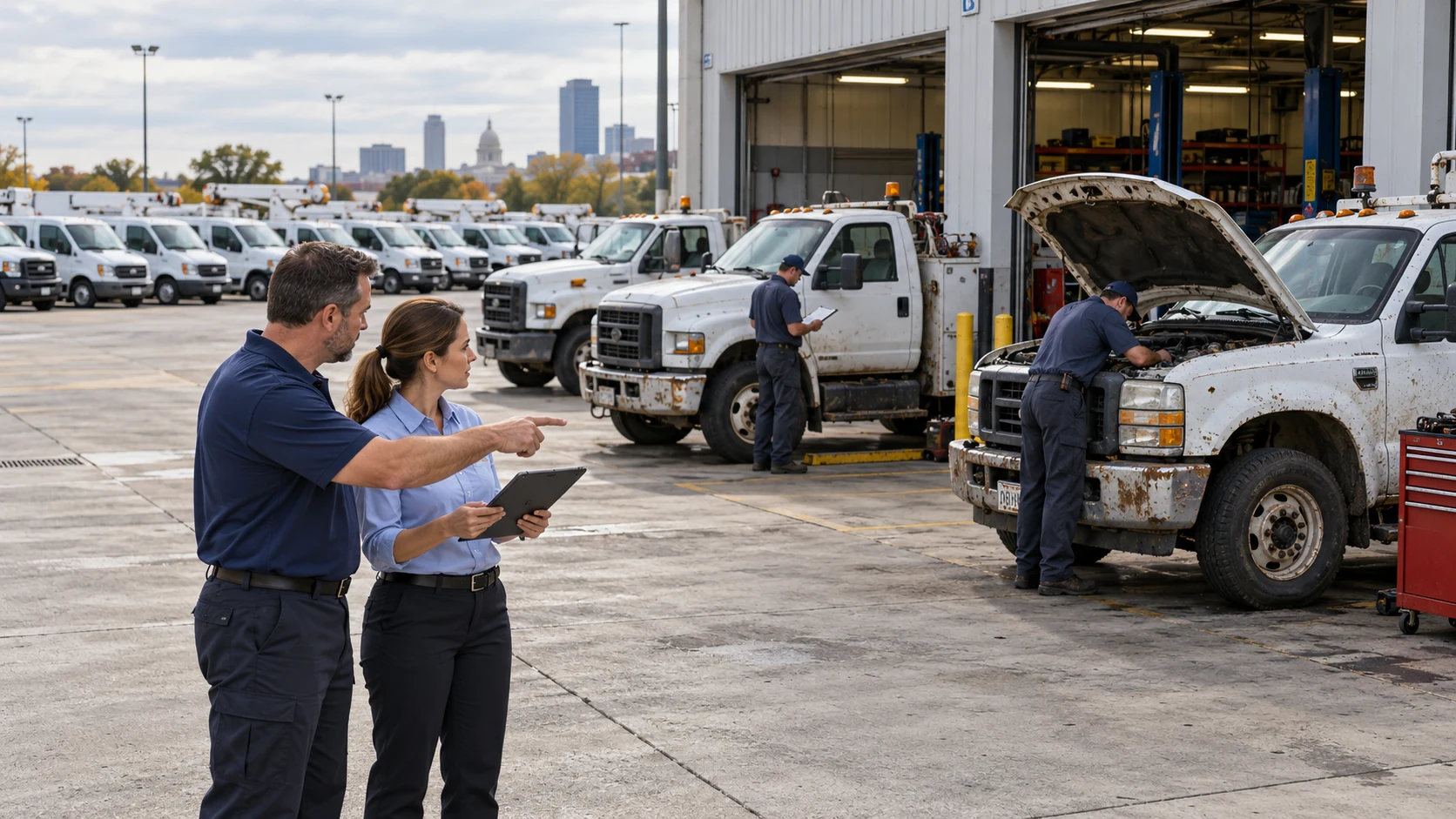
 Miya Bholat
Nov 03, 2026
Fleet Maintenance Vendor Onboarding: What to Check
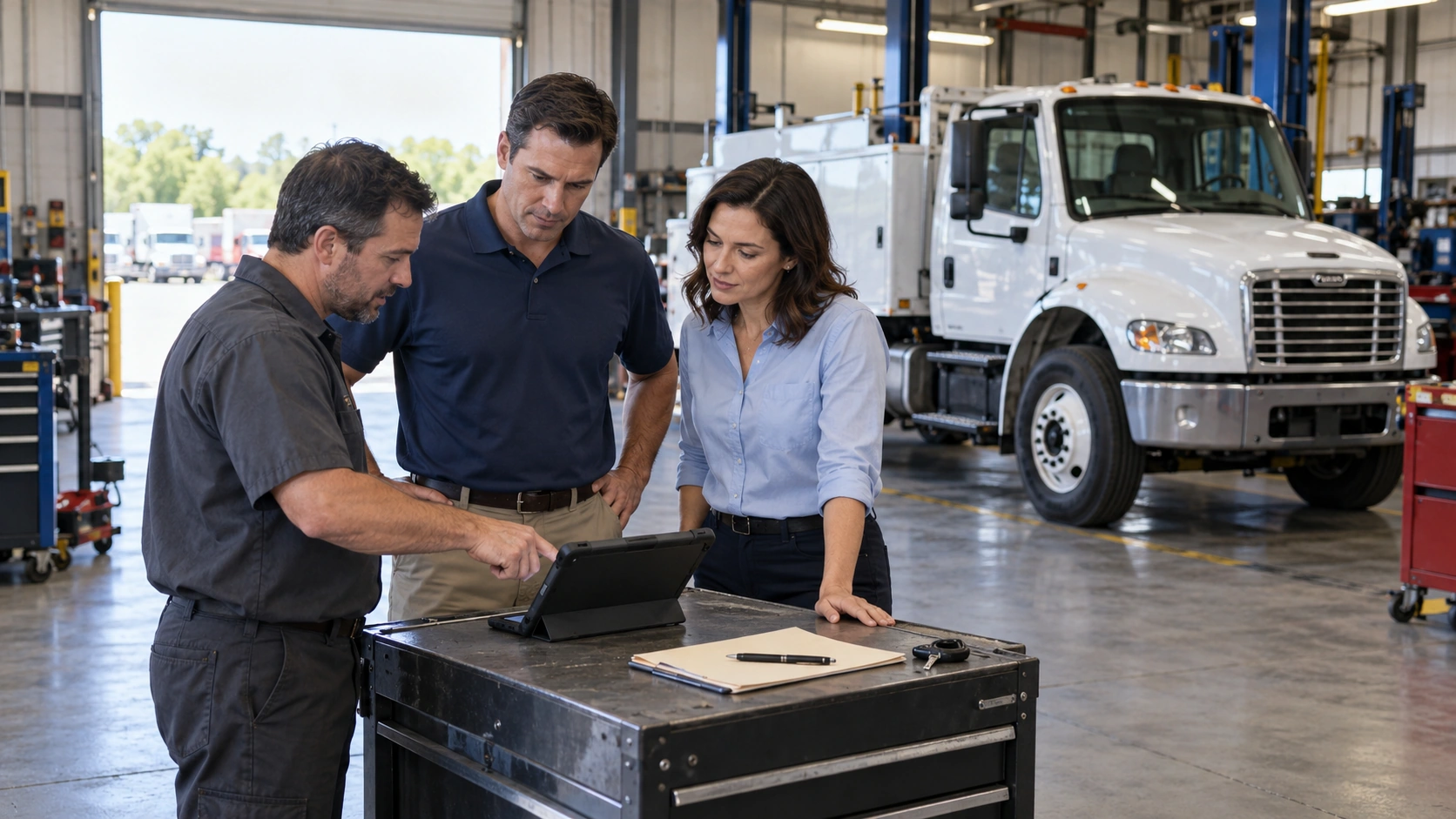
Fleet maintenance vendor onboarding means verifying insurance, legal identity, technician qualifications, equipment, pricing authority, and record requirements before a provider's first repair. A process supported by fleet maintenance software gives outside shops consistent approval and documentation rules.
The American Transportation Research Institute's 2026 operating cost research reports that repair and maintenance costs climbed 45% since 2019, reaching 21.5 cents per mile in 2025. Rushed setup adds approval disputes and rework to that pressure.
Key Takeaways
- Verify coverage before handing over keys. Check garage liability, garagekeepers limits, and policy dates.
- Check people and equipment. Request named credentials, inspection evidence, and shop capacity.
- Set spending authority. Agree on rates, fees, approval thresholds, and warranties in writing.
- Require complete records. Specify unit details, repairs, parts, labor, and digital submission deadlines.
- Use a 90 day trial. Start small, check compliance at day 30, and decide at day 90.
Why Vendor Onboarding Needs Its Own Gate in 2026
A capable shop still needs spending rules, secure storage, and record procedures. ATRI's 2026 operational cost report found repair and maintenance spending rose 8.6% in 2025 and another 2.4% in early 2026 versus the 2025 average. At 21.5 cents per mile, 500,000 fleet miles represent $107,500 in annual repair and maintenance spending at that benchmark. That is enough exposure to justify a formal gate before the first keys change hands.
TechForce Foundation's 2025 Technician Supply and Demand Report estimated 1 million transportation technician jobs to fill over five years. Verify staffing and appointments rather than accepting turnaround promises.
Onboarding vs Selection vs Ongoing Scoring
Selection decides who fits your fleet. If that remains open, compare in house versus outsourced fleet maintenance first.
Onboarding verifies documents and configures approvals, vehicle custody, and record handback. It ends with a controlled first assignment, not just a signed form.
Scoring uses actual results. A fleet maintenance vendor scorecard supports later performance reviews and work allocation.
Check Insurance and Legal Standing Before Any Vehicle Changes Hands
Check certificate dates, limits, legal names, and exclusions with the insurer when needed. Ask whether test drives, subcontractors, and overnight custody are covered. Before releasing a vehicle, collect:
- Insurance certificates and endorsements
- Business license and legal identity
- Tax forms and verified bank details
- Primary and emergency contacts
Garage Liability vs Garage keepers Legal Liability
Garage liability covers claims arising from shop operations. Garagekeepers legal liability covers customer vehicles in the shop's custody, subject to policy terms. Neither replaces the other.
California DGS's 2026 Auto Repair Vendor Program requirements specify $1,000,000 per occurrence in garage liability and garage keepers coverage sufficient for all vehicles in custody. Check workers' compensation and required additional insured endorsements. Size garage keepers against simultaneous overnight vehicle values, including your most expensive unit.
Tax, Banking, and Vendor Master Data
Match the W9, business license, legal name, and payee record. Confirm bank instructions by calling an independently verified number. Restrict later payment detail changes.

The Association of Certified Fraud Examiners' 2026 Report to the Nations examined 2,402 fraud cases; 21% involved billing schemes. This is not a fleet specific rate, but it supports careful vendor verification.
Verify Technician Credentials and Shop Capability
Match technicians and equipment to the exact work and vehicle classes you plan to assign.
ASE and OEM Certifications: Ask for Names, Not Banners
ASE certifies individual technicians, not shops. Request names, certification areas, and relevant OEM training. ASE Blue Seal recognition requires 75% of diagnosing and repairing technicians to be certified, but does not establish who will work on your units.
Track who handles brakes, electrical diagnostics, engines, and specialty equipment. A technician certified for light vehicles may not be the right person for heavy equipment. Require notice of staffing changes.
FMCSA Brake Inspector and Annual Inspector Evidence
For DOT regulated fleets, 49 CFR 396.25 requires compliant brake work and qualification records for responsible carrier employees. Independent shop technicians are not automatically covered by that employee record rule. Request their brake training or experience as a contractual safety check.
For annual inspections, 49 CFR 396.19 requires qualification records. A garage may hold copies, but the carrier must obtain them upon request. Relevant employee and annual inspector qualification evidence generally must be retained during the qualifying work and for one year afterward, subject to regulatory exceptions. CVSA's 2026 International Roadcheck identified 5,451 brake related violations, 39.1% of vehicle out of service violations. Collect evidence before assigning work.
Equipment, Bay Capacity, and EV Readiness
Confirm that lifts, diagnostics, and parking actually fit your largest units. Ask about:
- Lift and bay capacity for your heaviest units
- Diagnostic software for assigned makes
- Real booking and turnaround capacity
- Secure keys, overnight parking, and emergency response
- High voltage training and tools for EVs
Define which tasks require a bay versus mobile repair instead of a repair shop. For field service, verify safe parking, power access, waste handling, and who controls the vehicle keys.
Lock In Commercial Terms Before the First Repair Order
Set pricing and approval authority before diagnosis, including emergencies and subcontracted work.
Labor Rates, Parts Markup, and Not to Exceed Limits
Record labor rates, diagnostic fees, parts markup caps, supplies, disposal, and storage charges. Clarify whether diagnostic fees credit toward the repair. Set a not to exceed limit, for example $750 per job, with written approval above it. Name the approver, backup, and expected response time. This prevents surprise bills and approval stalls.
Address maintenance approvals that delay repairs with escalation contacts. Require revised approval when the scope changes.
Approval limits control work upfront. Invoice checks catch problems afterward. Assign both processes an owner.
Specify evidence required for diagnostics and extra fees. Use fleet vendor charges worth reviewing twice for deeper invoice exceptions.
Comeback Warranty and OEM Warranty Checks
Document the workmanship warranty for parts, labor, duration, mileage, and repeat fault remedies. Require checks for OEM, extended, and component warranties before covered work begins.
Build screening into intake. Fleet warranty recovery also depends on preserving repair and claim evidence.
Set Record Handback Rules From Day One
Show the vendor a sample completed record and set digital handback within an agreed window, such as 24 hours after release. For equipment with engine hours, do not substitute mileage alone. Require:
- Unit number, VIN, odometer or engine hours
- Complaint, cause, and correction
- Labor, parts, quantities, and charges
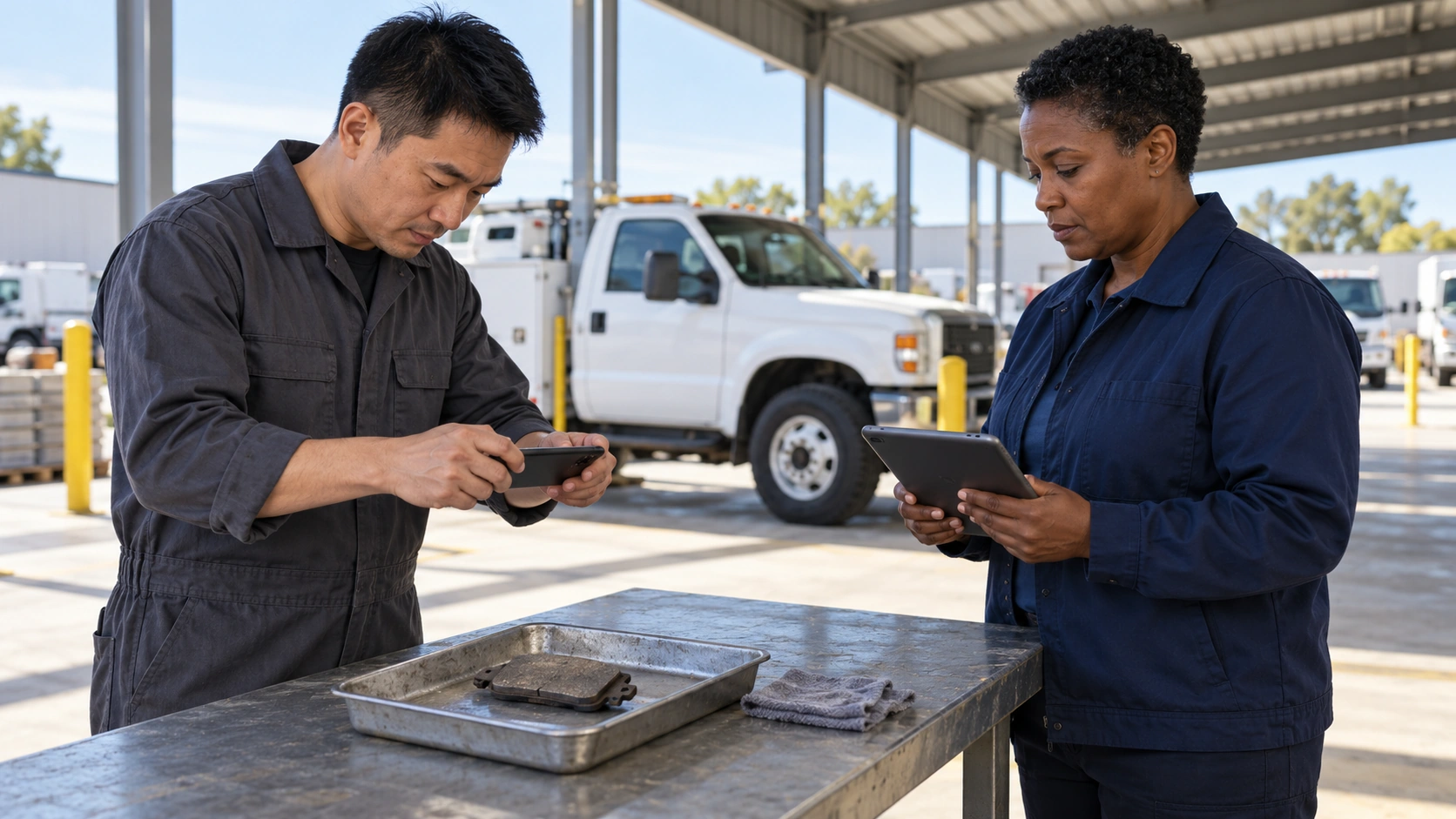
- Failed part photos when relevant
- Approval, technician, and completion date
Start with the details every fleet repair request should include so the shop receives usable vehicle history.
Check the first handback. Reject missing repair details, obtain corrections, and preserve the approval alongside the final evidence.
A fleet maintenance work order keeps tasks, approvals, and evidence together. Confirm that the vendor can deliver records in your required format.
Fleet Maintenance Vendor Onboarding Checklist
Use this signoff gate before the first job. Assign a renewal owner.
| What to Check | Proof to Collect | Red Flag | Re Verify |
|---|---|---|---|
| Garage liability | Certificate and limits | Expired policy | At renewal |
| Garagekeepers legal liability | Custody limits | Underinsured vehicles | At renewal |
| Workers' comp and additional insured | Endorsements | Missing coverage | At renewal |
| Tax and banking | W9 and callback | Payee mismatch | On change |
| Named technician credentials | Certificates and roster | Shop sign only | Staff changes |
| Brake or annual inspector evidence | Qualification records | No proof | Annually |
| Equipment and EV capability | Bays, tools, training | Wrong capacity | Fleet changes |
| Labor and markup terms | Signed rate sheet | Hidden fees | Annually |
| Approval limit | Signed threshold | Scope breaches | Contact changes |
| Workmanship warranty | Written terms | Verbal only | Annually |
| Record handback | Sample record | Missing VIN | First 30 days |
| Emergency contacts | Backup numbers | Unreachable | Quarterly |
How to Run a 90 Day Vendor Onboarding Workflow
Run a controlled trial with one owner and firm review dates. Record exceptions and corrections during the trial so the final decision rests on evidence.
Exit Criteria to Agree on Up Front
Agree on measurable exit conditions before the trial:
- Lapsed insurance or unverifiable qualifications
- Over 10% incomplete records after correction requests
- Any unauthorized approval limit breach
- Unresolved repeat workmanship failures
Make Vendor Onboarding a Repeatable Fleet Process
Give one person ownership of documents, terms, qualification evidence, and renewal reminders. Stop assignments when essential proof is missing.
Keep outside and internal work together in vehicle service history. AUTOsist supports consistent records, while your team owns the verification and approval rules. The first 90 days establish whether the relationship can work reliably.
Frequently Asked Questions
-
How much garagekeepers insurance should a fleet repair vendor carry?
Coverage should be sufficient for the combined value of all customer vehicles the shop may hold at once. Confirm the policy limits and exclusions before assigning work. -
Who keeps qualification records for outside DOT annual inspectors?
The motor carrier must be able to produce the records. The repair shop can retain copies, but the carrier remains responsible for obtaining them when requested. -
What if a repair exceeds the vendor's approved spending limit?
The vendor should stop additional work, submit a revised estimate, and obtain written approval before continuing. -
Is a vendor invoice enough for fleet maintenance records?
Only if it contains the required vehicle identification, service date, and repair details. Otherwise, request a complete repair record. -
What if a new repair vendor completes too few jobs during the 90 day trial?
Extend the trial with a limited scope. Approve the vendor only after enough representative jobs demonstrate reliable documentation, approval compliance, and repair quality.