 Miya Bholat
Feb 03, 2026
Best Fleet Maintenance Software for Small Fleets in 2025
Key Takeaways
- Small fleets need structure, not complexity. The right maintenance software replaces spreadsheets with automation that actually fits small teams.
- Preventive maintenance delivers the fastest ROI. Automated reminders alone can cut unplanned repairs by 20–30%.
- Mobile access drives adoption. If drivers can’t use it on their phones, it won’t get used.
- Fuel and cost visibility protect margins. Tracking cost per mile reveals problems before they get expensive.
- Start simple and scale. Choose software that works today and grows with your fleet—not against it.
Why Small Fleets Need Dedicated Maintenance Software
If you’re running a small fleet—anywhere from 5 to 50 vehicles—you’re dealing with a unique mix of responsibility and constraint. You don’t have extra staff. You don’t have an IT department. And you definitely don’t have time to babysit spreadsheets or chase paper maintenance logs. Yet every missed oil change or surprise breakdown hits harder because downtime affects a bigger percentage of your operation.
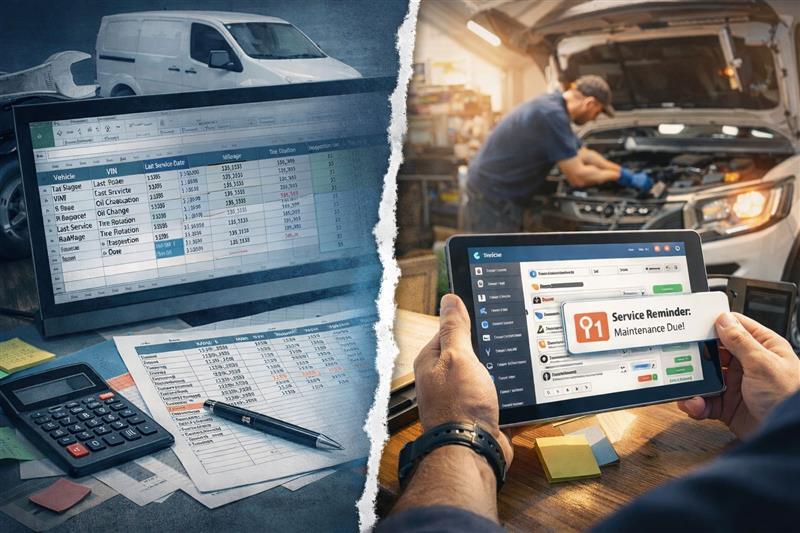
Most small fleets start with spreadsheets, paper folders, or whiteboards. That works when you have three trucks and one driver. But as soon as you grow, those systems quietly break down. A missed preventive service turns into a roadside failure. A lost receipt makes it impossible to understand true vehicle costs. And suddenly, what felt “cheap” starts costing thousands per year in repairs and lost productivity.
Reactive maintenance is especially expensive for small fleets. Industry data consistently shows that unplanned repairs cost 2–3x more than scheduled maintenance. For a small fleet, that can mean the difference between hitting profit targets or missing payroll. Dedicated fleet maintenance software exists to solve this exact problem—bringing structure, visibility, and consistency without enterprise-level complexity.
Key Features Small Fleet Owners Should Prioritize
Not all fleet maintenance software is built with small operations in mind. Many platforms are designed for large enterprises and simply scaled down, leaving small businesses paying for features they’ll never use. The goal for small fleets isn’t more software—it’s the right software.
Before diving into individual features, it helps to understand what truly matters at this stage of growth. Small fleets need tools that reduce admin time, prevent missed maintenance, and give clear cost visibility—without long onboarding cycles or complicated dashboards.
Here are the core capabilities that make the biggest difference for small fleets managing 5–50 vehicles.
Maintenance Scheduling and Reminders
Maintenance scheduling is the foundation of any effective fleet maintenance system. Without automation, scheduling quickly becomes reactive—services happen late, records get skipped, and vehicles stay on the road longer than they should.
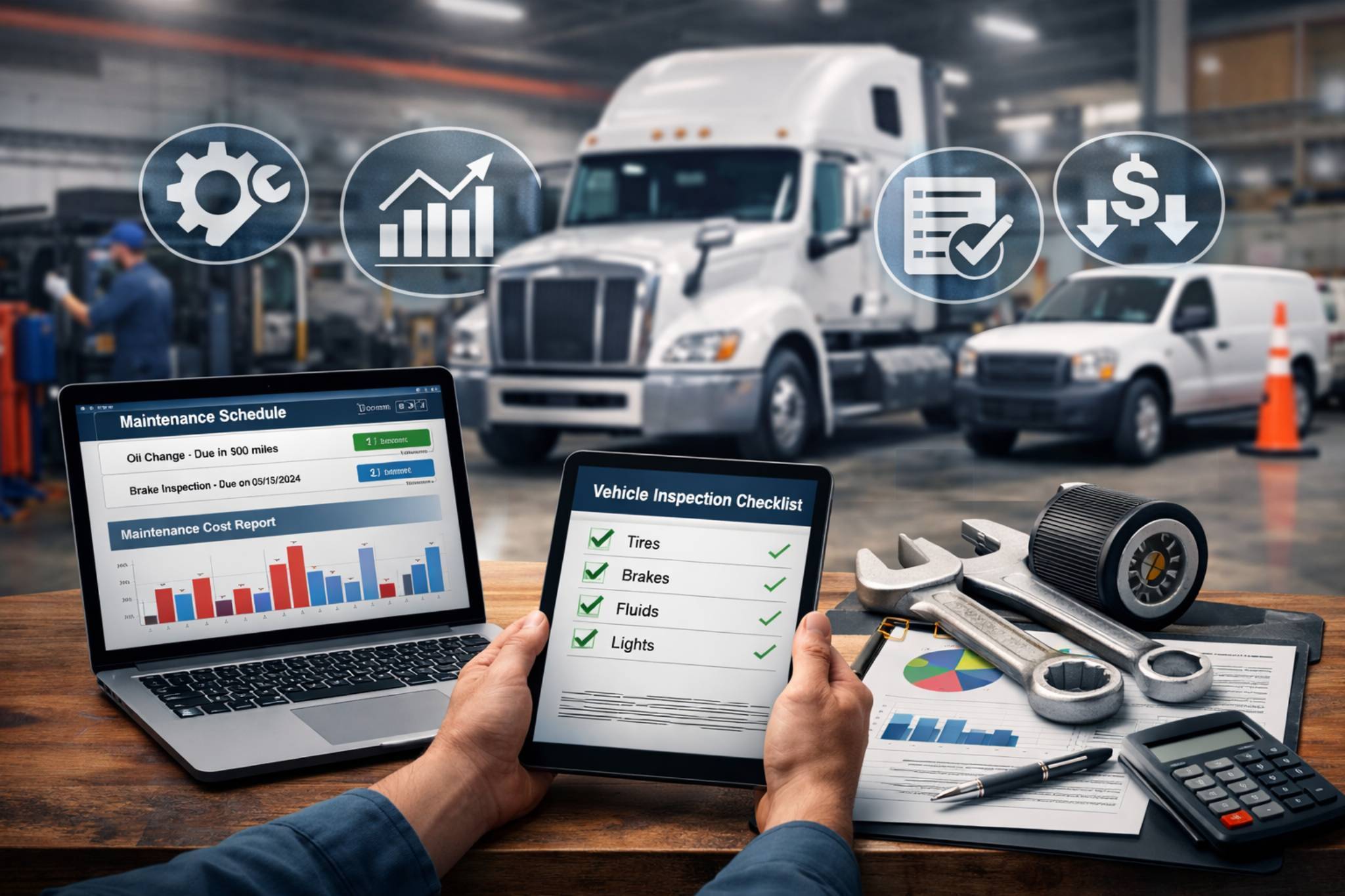
Good software allows you to set mileage- or time-based service intervals and automatically sends reminders before work is due. For a small fleet manager, this can reduce maintenance planning from 1–2 hours per week to about 15 minutes.
With tools like Fleet Preventive Maintenance Schedules and Reminders, service schedules are tied directly to vehicle usage, not guesswork. That means oil changes, inspections, and tire rotations happen on time—even when you're busy running the business.
Work Order Management
Paper work orders and text-message approvals don’t scale. They get lost, lack detail, and make it impossible to audit who did what and when.
Digital work orders centralize everything: labor notes, parts used, service photos, and completion dates. This is especially useful for small fleets that rely on a mix of in-house maintenance and outside shops.
A solid Fleet Maintenance Work Order Software solution helps small teams:
- Track maintenance history without filing cabinets
- Attach photos to document issues and repairs
- See open vs. completed work at a glance
- Reduce disputes with vendors using clear records
That level of accountability becomes critical as your fleet grows past a handful of vehicles.
Mobile Access for Drivers and Technicians
Small fleets don’t operate from desks—they operate from job sites, depots, and roadsides. Mobile access isn’t a “nice-to-have”; it’s how work actually gets done.
A mobile app allows drivers to log issues immediately, complete inspections, and upload photos without returning to the office. Technicians can close work orders in real time instead of waiting until the end of the day.
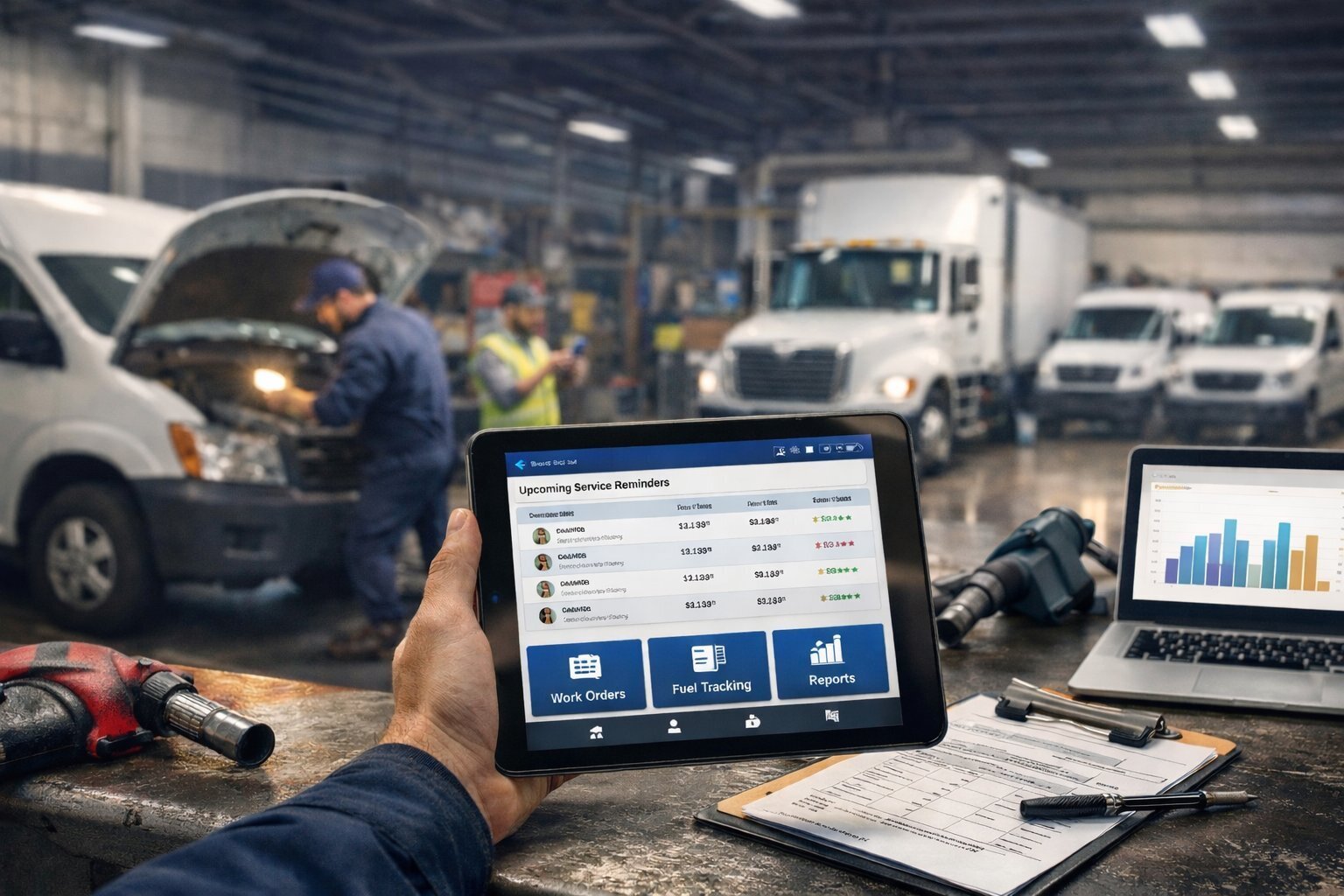
With a dedicated Mobile App, small fleets typically cut administrative follow-up in half. Instead of chasing drivers for paperwork, everything flows directly into the system as work happens.
Fuel and Cost Tracking
Fuel is often the second-highest operating cost for small fleets after labor. Without tracking, it quietly drains profit month after month.
Fleet maintenance software with fuel tracking lets you monitor consumption trends, calculate cost per mile, and spot vehicles that are becoming inefficient. Even identifying one vehicle getting 10% worse fuel economy can save hundreds—or thousands—per year.
Tools like Fleet Fuel Management and Tracking Software help small fleets connect fuel costs directly to maintenance decisions, instead of guessing where money is going.
Reporting Without the Complexity
Small fleet owners don’t need 40 customizable dashboards. They need answers.
The best systems focus reporting on metrics that matter:
- Maintenance cost per vehicle
- Downtime trends
- Fuel spend over time
- Upcoming services
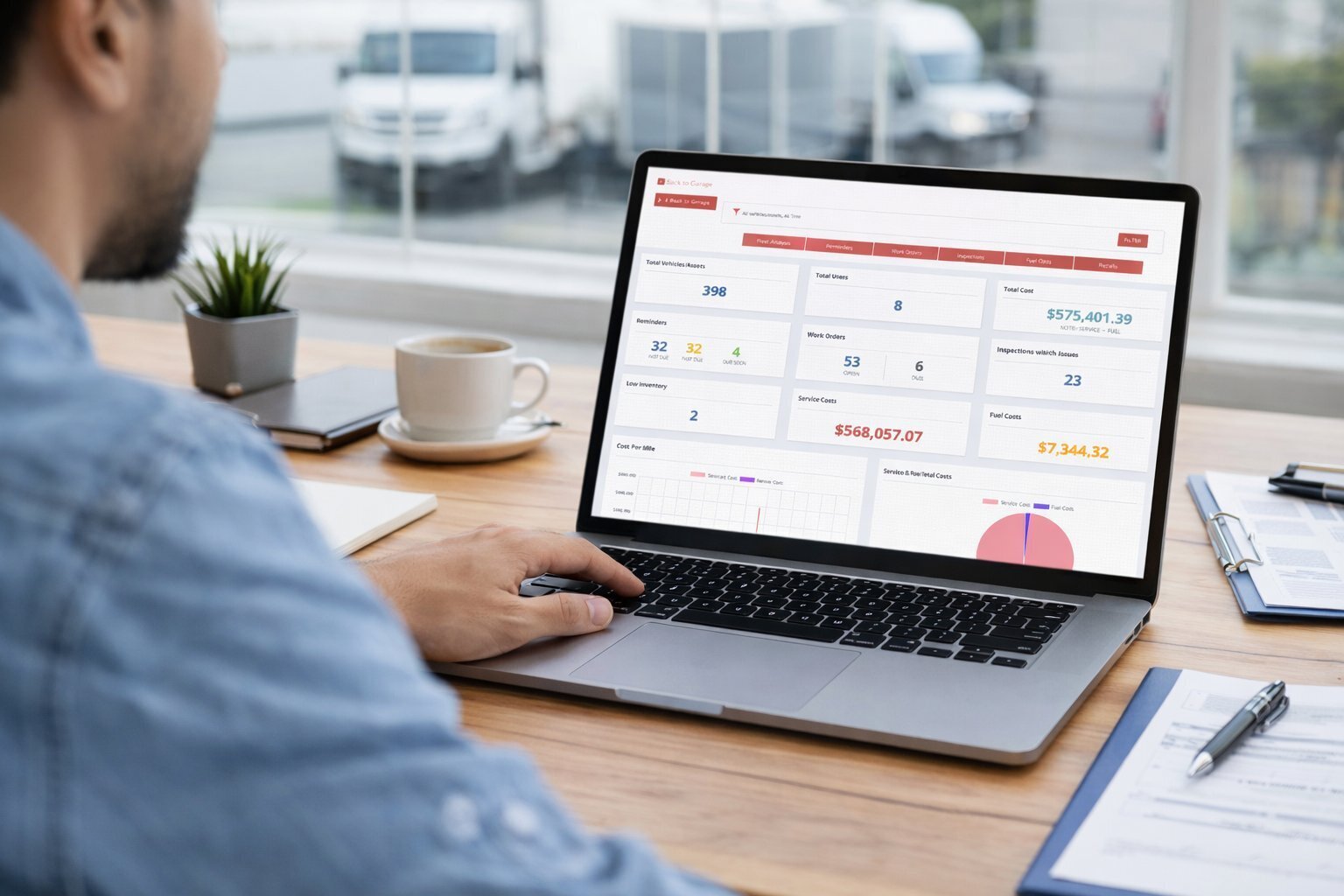
A clean Fleet Reports and Dashboard gives small business owners clarity without analysis paralysis—helping them make decisions quickly, not burying them in charts.
What to Avoid: Features That Small Fleets Don't Need (Yet)
It’s easy to get distracted by enterprise features that sound impressive but deliver little value at a small scale. Advanced AI forecasting, custom API development, or multi-region compliance tools often add cost and complexity without immediate benefit.
Small fleets should be cautious of platforms that:
- Require long implementation projects
- Lock features behind expensive tiers
- Demand extensive training just to get started
These features may make sense later—but early on, they often slow adoption and frustrate users. The best approach is choosing software that works well today and can scale naturally when your operation grows.
Pricing Models That Make Sense for Small Businesses
Pricing transparency matters more for small fleets than anyone else. Most small fleet maintenance software falls into the $20–$100 per month range, depending on vehicle count and features.
Per-vehicle pricing works well for fleets with predictable growth, while flat-rate plans are better for those hovering at a stable size. Free trials are essential—but only if you know what to test.
During a trial, small fleets should focus on:
- How fast vehicles can be set up
- Whether drivers actually use the system
- How easy it is to pull basic reports
- Whether reminders prevent missed services
Hidden costs to watch for include onboarding fees, data export charges, and mobile access add-ons.
Implementation: Getting Your Team On Board
Most small fleets can fully implement maintenance software in 2–4 weeks. The key is starting simple.
Begin with one vehicle type or location. Train drivers on just the basics: inspections and issue reporting. Add work orders and reporting later. This phased approach reduces resistance and improves adoption.
Migrating from spreadsheets or paper usually takes a few hours—not days—especially when the software supports bulk uploads and mobile-first workflows.
Measuring ROI: How Small Fleets Know It's Working
Return on investment doesn’t show up overnight, but most small fleets see measurable gains within 6–12 months.
The metrics that matter most include:
- Maintenance cost per vehicle
- Breakdown frequency
- Downtime hours
- Fuel efficiency trends
Even reducing one major breakdown per year can justify the cost of software. For many small fleets, savings come from preventing issues—not fixing them faster.
Making the Decision: Choosing the Right Software
Before committing, ask vendors:
- How long setup really takes
- What features are included at your size
- How support works for small teams
- Whether pricing scales reasonably
Red flags include vague pricing, limited trials, and software that feels built for someone else's operation.
If you want a system built specifically for small fleets, AUTOsist focuses on exactly that balance: powerful maintenance tools without enterprise bloat.